


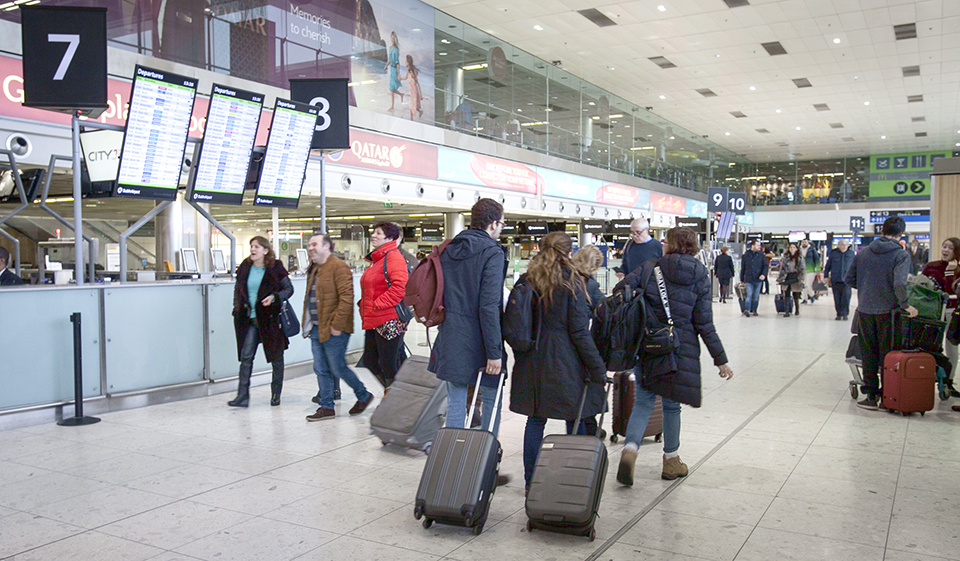
The Commission for Aviation Regulation (CAR) has published its Decision on the maximum level of Airport Charges at Dublin Airport for 2023 to 2026. CAR is responsible for setting airport charges in the best interest of airport users (airlines and passengers), balancing efficiency with the delivery of high quality services and infrastructure.
This is CAR’s third interim review of the 2019 Determination and is in response to the COVID-19 pandemic, which has had a devastating impact on the aviation industry. CAR has amended the price caps for 2023 and 2024 and extended the period of the determination by two years, setting new price caps for 2025 and 2026. This Decision takes account of submissions received as part of CAR’s consultation on its Draft Decision in July 2022.
CAR has set an average base Price Cap of €7.59 per passenger for the period, starting at €7.59 in 2023 and with price caps of €7.53, €7.48 and €7.77 in 2024, 2025 and 2026 respectively. This compares to the average €8.52 CAR proposed in its Draft Decision. If Dublin Airport delivers its capital investment programme as planned, the real price cap will increase up to €9.57 per passenger by 2026.
These Price Caps are in real February 2022 prices, i.e. the effect of inflation has been deducted from them. If inflation transpires as forecast, and Dublin Airport delivers its investment plan in line with its own timelines, these real price caps will convert to nominal (including inflation) price caps of €8.68 in 2023, €9.23 in 2024, €10.30 in 2025 and €11.73 in 2026. These compare directly to a nominal price cap for 2022 of €8.11 (before downward adjustments for service quality).
CAR estimates that the price cap will allow Dublin Airport collect €2.8bn in revenue, €1.4bn from Airport Charges over the 4 years, and a further €1.4bn from commercial activities such as retail, car parking and property rental, in nominal terms.
CAR assesses that the Price Cap serves the best interest of passengers and airlines and will accomplish the following:
- Enable and incentivise the delivery of high-quality airport services to passengers
- Allow Dublin Airport to invest in significant increases in capacity, with a total capital investment allowance of c€3bn (of which €2.1bn is expected to be spent by 2026).
- Allow Dublin Airport to invest in sustainability projects, to enable it to meet its climate targets.
- Ensure Dublin Airport charges an efficient price, which will assist in the aviation industry’s recovery from the COVID-19 pandemic and bring associated benefits to the Irish economy.
- Encourage competition between airlines and increase overall connectivity, leading to value and choice for passengers Publishing the Price Cap Decision Deputy Commissioner,
David Hodnett said: “The price cap we have set today will enable Dublin Airport to deliver a high-quality service for passengers from 2023 to 2026. We expect the level of service delivered by Dublin Airport to return to pre pandemic levels throughout the period.
We have allowed sufficient levels of operating costs to achieve the high quality service levels we have specified, with associated rebates and bonuses to incentivise delivery. The price cap reflects confidence in the continued recovery in aviation, and will facilitate further growth by setting efficient charges.
We expect passenger numbers at Dublin Airport to be at 31.7m in 2023, which is 96% of 2019 levels. With the recovery of aviation it is timely for Dublin Airport to invest significantly in key pieces of national infrastructure. We have made capital investment allowances of c€3bn, which, when completed by Dublin Airport, will provide capacity to handle 40 million passengers per year at a high level of service.
In our price cap calculations, we also make allowances for sustainability investments of €425m to enable Dublin Airport to achieve its sustainability targets.”
Dublin Airport has proposed a higher price in the range of €13.04 to €14.77. This is a significant difference, driven by three main factors. First, Dublin Airport forecasts a slower recovery in passenger traffic. Second, Dublin Airport proposes a higher cost of capital (return for investors). Third, Dublin Airport forecasts that operating costs should grow at a much faster rate than CAR’s growth forecast.
daa was quick to issue a statement criticising the price cap saying: “it will have a detrimental impact on the number of staff that will be allowed by the regulator in vital security, cleaning and other key roles at the airport over the next four years. This runs contrary to the interests of airport users, our passengers and airline partners, who share our desire for efficiency, high quality service and investment in vital strategic infrastructure.”
The statement went on to say that: “CAR’s consultants are disallowing security staff each year and up to 240 of the staff needed at Dublin Airport by 2026, which greatly undermines daa’s proposition to keep queues below 30 minutes (a CAR service quality target). The decision disregards the operational lessons learned from COVID-19 and the necessity for even greater staff numbers in key operational areas.”
Noting CAR’s decision to drop this desktop analysis on Dublin Airport’s busiest day of the Christmas Season, December 23rd, as CAR closed its offices until January 2, while daa staff will work through the Christmas and the New Year holidays to ensure passengers’ reunions, holidays and homecomings will be facilitated, daa Chairman, Basil Geoghegan said: “Yet again, the Irish taxpayer is short changed by CAR in its financial allowances for airport staffing, despite the obvious needs of passengers and customers.”

