



The Department of Defence has released its Updated Detailed Implementation Plan (February 2026) for delivering the recommendations of the Commission on the Defence Forces (CoDF). Among the wide‑ranging reforms outlined, several developments stand out for their direct impact on the Irish Air Corps and the future of military aviation in Ireland.
Speaking following the launch of the Implementation Plan update, The Minister for Defence, Helen McEntee TD, said: “These documents will highlight a renewed focus on workforce planning, new command and joint structures, service reform, revitalising the Reserve Defence Force and developing modern joint capabilities. The Strategic Framework will also set out priority actions for the year ahead, including boosting recruitment and retention, regenerating the Naval Service and Air Corps, improving equipment and working environments, progressing legislative reform and accelerating digital and data transformation.
Strategic Reach Aircraft Delivered
One of the most notable milestones in the report is the delivery of the new Falcon 6X (290) in December 2025. This aircraft significantly increases the State’s long‑range airlift capabilities, allowing the Defence Forces to better support overseas missions, humanitarian operations, medical evacuation, and priority ATCA taskings. It also enhances Government transport options, closing a long‑standing capacity gap in Ireland’s strategic aviation.
C295 Fleet Expansion Continues
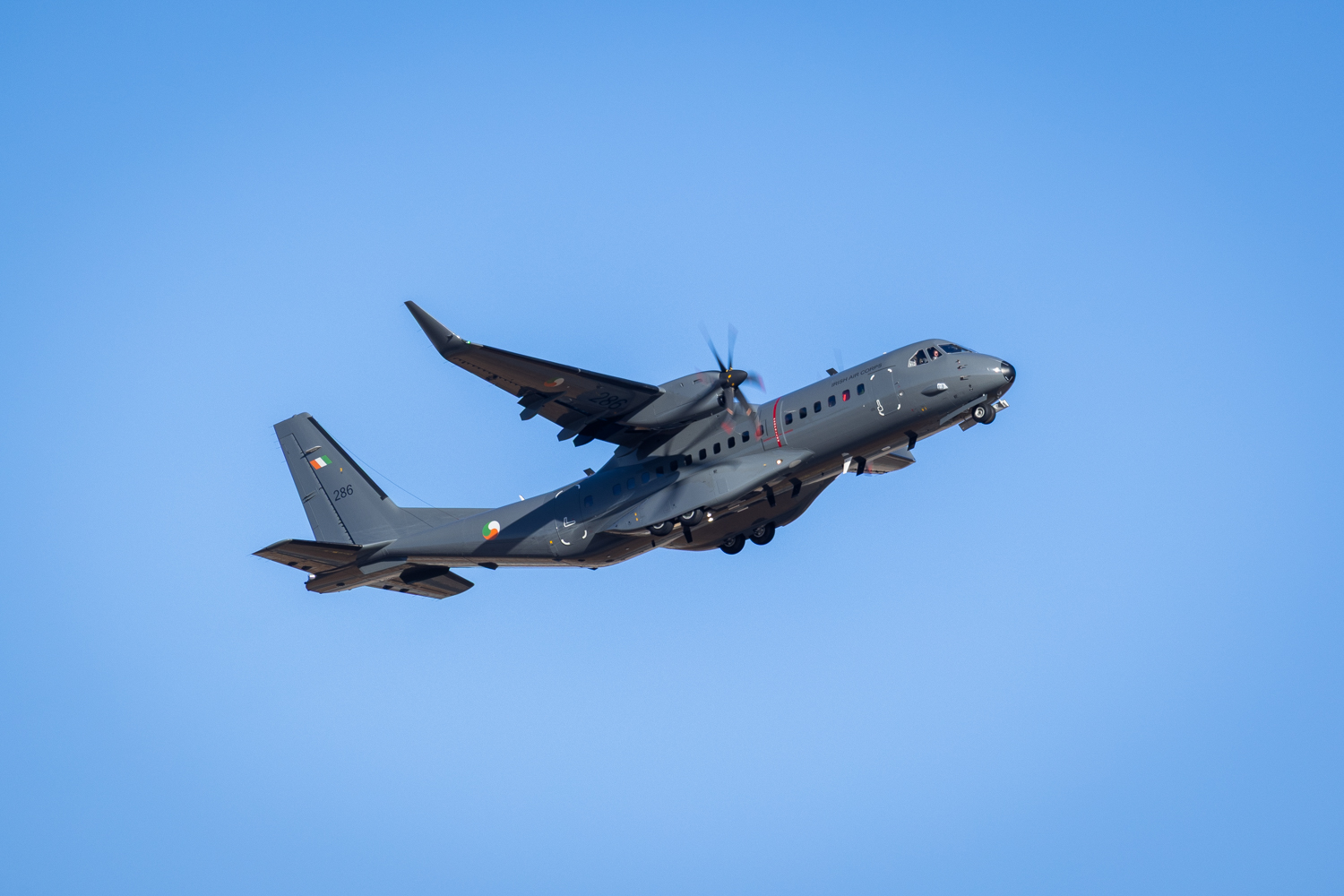
The Air Corps’ transport and surveillance portfolio has also strengthened with the delivery of a third Airbus C295M aircraft in October 2025. This addition brings further capacity to maritime patrol, logistics support, and European engagement commitments. Together with the earlier deliveries, the expanded C295 fleet represents a major step forward in Ireland’s ability to conduct multi‑role operations at home and abroad.
New Rotary‑Wing Expansion Underway
Helicopter capability is another area of major investment. The four H145M light utility helicopters ordered in late 2024 are now progressing through production, with three scheduled to arrive by the end of 2027 and the final aircraft in early 2028. This fleet will support a wide range of missions, including Special Operations Forces, air ambulance tasks, national security duties, and general utility work. Notably, this purchase exceeds the initial CoDF recommendation, ensuring a more robust and future‑proofed rotary‑wing capability.

Medium‑Lift Expansion and Long‑Term Fleet Replacement
The plan also confirms that two additional medium‑lift helicopters will be added to the fleet by 2028, complementing the existing AW139s. Beyond this, a longer‑term programme is in place to replace the current medium‑lift fleet with eight super‑medium helicopters in the post‑2028 period. These changes form part of the broader effort to bring the Defence Forces to Level of Ambition 2 and to ensure that Ireland has a credible, modernised aviation capability for both national and overseas operations.
New Air Force Structure and Air Force Reserve
A major structural reform will see the Air Corps transition into a fully-fledged Air Force, complete with its own Service Chief and dedicated headquarters. This reflects a shift to a more modern command model aligned with international best practice. Supporting this development, the Defence Forces will also establish a new Air Force Reserve, with a minimum planned strength of 200 personnel. This reserve component will be integrated into Air Force development work and is intended to strengthen readiness and specialist support capacity.
Military Radar Programme Moves Forward
Progress continues on the long‑anticipated Primary Radar / Recognised Air Picture (RAP) programme. The Preliminary Business Case has now been approved, allowing for detailed negotiations with France to begin. The plan outlines a phased delivery of radar capability beginning in 2026. Once completed, this project will provide Ireland with comprehensive airspace monitoring for the first time, an advancement of historic proportions.
Counter‑Drone and RPAS Enhancements
As hybrid threats continue to evolve, the Air Corps will see new investment in both unmanned and counter‑unmanned systems. Anti‑drone and counter‑UAS capabilities are scheduled for introduction by 2026, strengthening the Defence Forces’ ability to protect critical infrastructure and respond to emerging risks. Meanwhile, expanded RPAS (Remotely Piloted Aircraft Systems) capabilities are planned for deployment in the post‑2028 period, accompanied by updates to training and professional military education to ensure personnel can operate these systems effectively.
The Updated Detailed Implementation Plan marks one of the most significant periods of transformation in the history of the Defence Forces. For the Air Corps, it signals a move toward a larger, more capable, and more strategically aligned Air Force, supported by new fleets, new structures, and modernised operational technologies. The coming years promise unprecedented growth in Ireland’s military aviation capability, positioning the State to meet both national and international challenges with greater confidence and capacity.

