


Aircraft Leasing Ireland (ALI) hosted some 300 industry professionals for a gathering of insightful speakers, discussion, and analysis on Tuesday, 11th November. All had the opportunity to hear directly from aviation industry leaders, lessors, policymakers, and airline operators on what should keep Ireland at the forefront of global aircraft leasing.
With 60%+ of the global market share of leased aircraft operating across 95+ countries, Europe maintains a key competitive advantage in aircraft leasing, anchored by Ireland as the world’s leading aircraft leasing hub, which was a reminder of the powerful role Dublin/Shannon play as hubs of the aircraft leasing industry.
Key themes from the summit included:
- The need to update legacy frameworks, from outdated trading systems and fragmented regulation.
- The slow pace of aircraft trading; sector faces Victorian-era inefficiencies that threaten its global edge, from reducing paperwork in leasing to exploring AI-driven solutions to work smarter in tech records and legal.
- A shortage of skilled workers, especially in machine tools
- Potential leasing hub competitors, panellists said, Ireland’s status as the world’s hub for aircraft leasing could be at risk unless urgent reforms are made. Speakers emphasised that Ireland must modernise to maintain its leadership in this high-value sector. Of note also were references to a recommended new MRO engine shop to be built, and a whole island North and South aviation development focus.
MC Jude Webber of the Financial Times introduced the Chair of Aircraft Leasing Ireland, Karl Griffin, CEO of Genesis, for ALI opening remarks, leading the conversation on the key opportunities and challenges facing our sector.
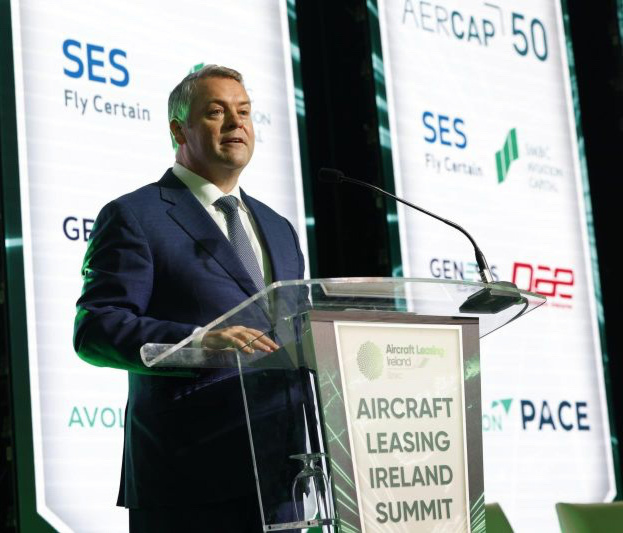
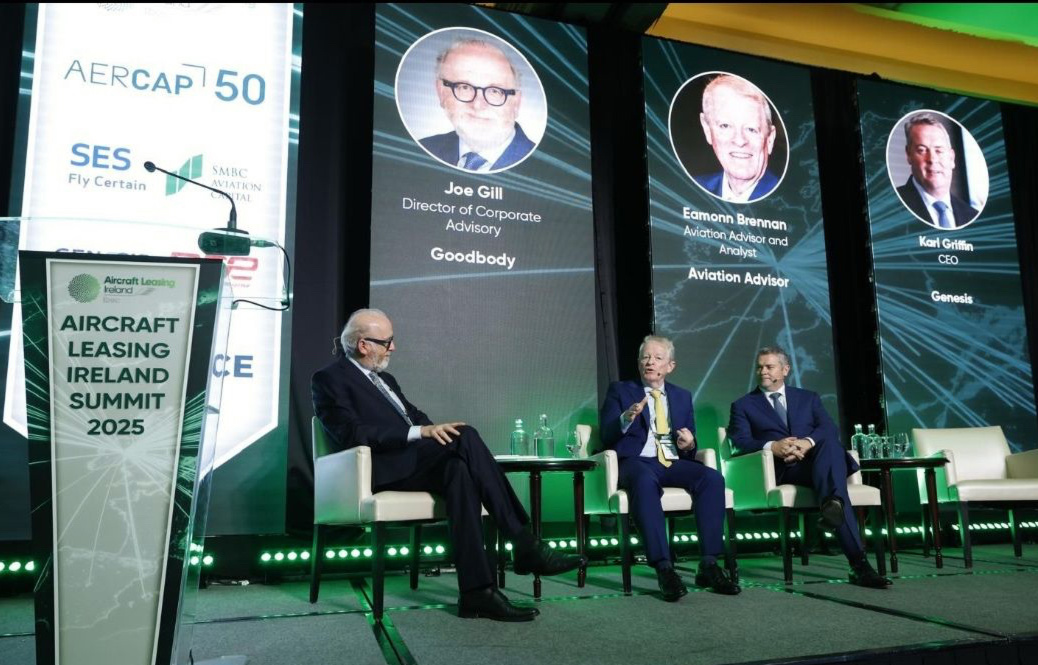
The first panel of the day “Setting the Scene: The Global Pulse of Aviation Finance”
Moderated by Joe Gill Director of Corporate Advisory, Goodbody, joined by Karl Griffin and Eamonn Brennan Aviation Advisor (formerly Eurocontrol and IAA). The panel discussed policy developments affecting Irish aviation and opportunities available to those looking to enter the industry. Joe Gill, said that Ireland has a “Victorian way” of settling aircraft transfers, despite the country’s position as a leader in the aircraft leasing industry. “The paperwork involved in getting assets moved is like something from the Dickens era. You really need to get your act together and use Ireland as a leader to settle aircraft trades much faster than the six or nine months it currently takes” he said.
This was echoed by Brennan, who said that Ireland should create and promote a certified digital asset transfer platform to enhance the efficiency of aircraft trading. “We’re looking for some kind of digital platform that could come out of Ireland, that would embrace commonality and reduce the legal and administrative costs for aircraft owners and users”, Brennan said. “There’s a really big opportunity there,” he added.
Keynote Address “Shaping the Future Insights” was given by Filip Cornelis, EU Director for Aviation, DG Move. Cornelis addressed recent EU policy developments, SAF mandates and the Sustainable Transport Investment Plan (STIP). Filip’s insights into the Commission’s plan were invaluable as we collectively work towards our net-zero goals. He also brought up the EU aviation sanctions on Russia (now three & a half years) in relation to Parts-Circumvention by 3rd party countries, to which it is proving very difficult to counter.
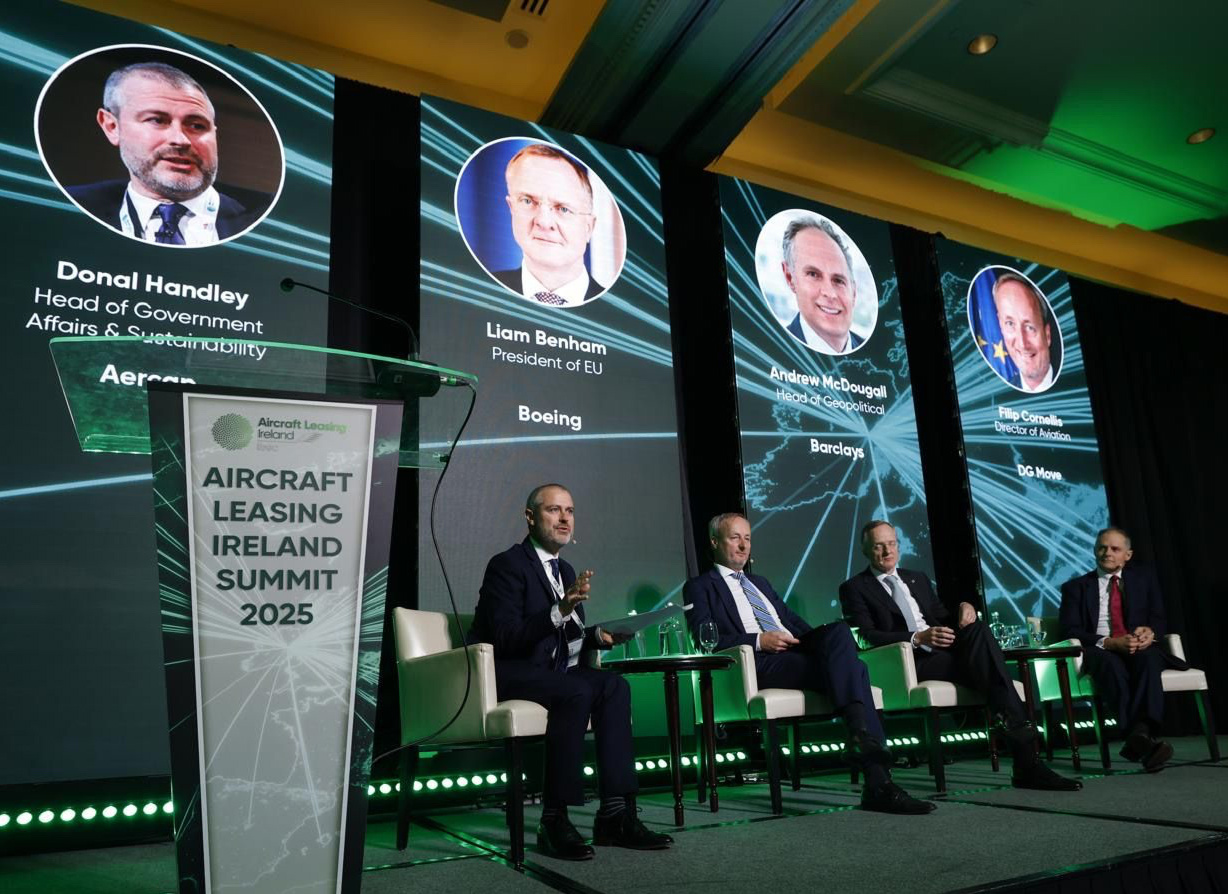
The second panel of the day, “Geopolitics, Competitiveness, and the effects on Aviation” was moderated by Donal Handley, AerCap Head of Government Affairs & Sustainability. Donal was joined by panellists Andrew McDougall, Managing Director, Geopolitical Risk, Barclays Bank, Liam Benham, Boeing President of EU, NATO and Government Affairs Europe, and Filip Cornelis Director for Aviation, DG Move.
The panel explored the growing complexities facing the aviation industry, including the ripple effects of geopolitical instability, trade tensions, environmental and regulatory shifts, and their impacts on aviation and aircraft leasing strategies. Including the impact of the US-China relationship on the sector and the zero-for-zero agreement between the EU and US for the aviation sector.
References were also made on potential competitor centres to watch that could challenge Dublin’s dominance in leasing, such as Singapore or Hong Kong. Quote: “It’s not all risk, there’s a big opportunity out there at the same time”
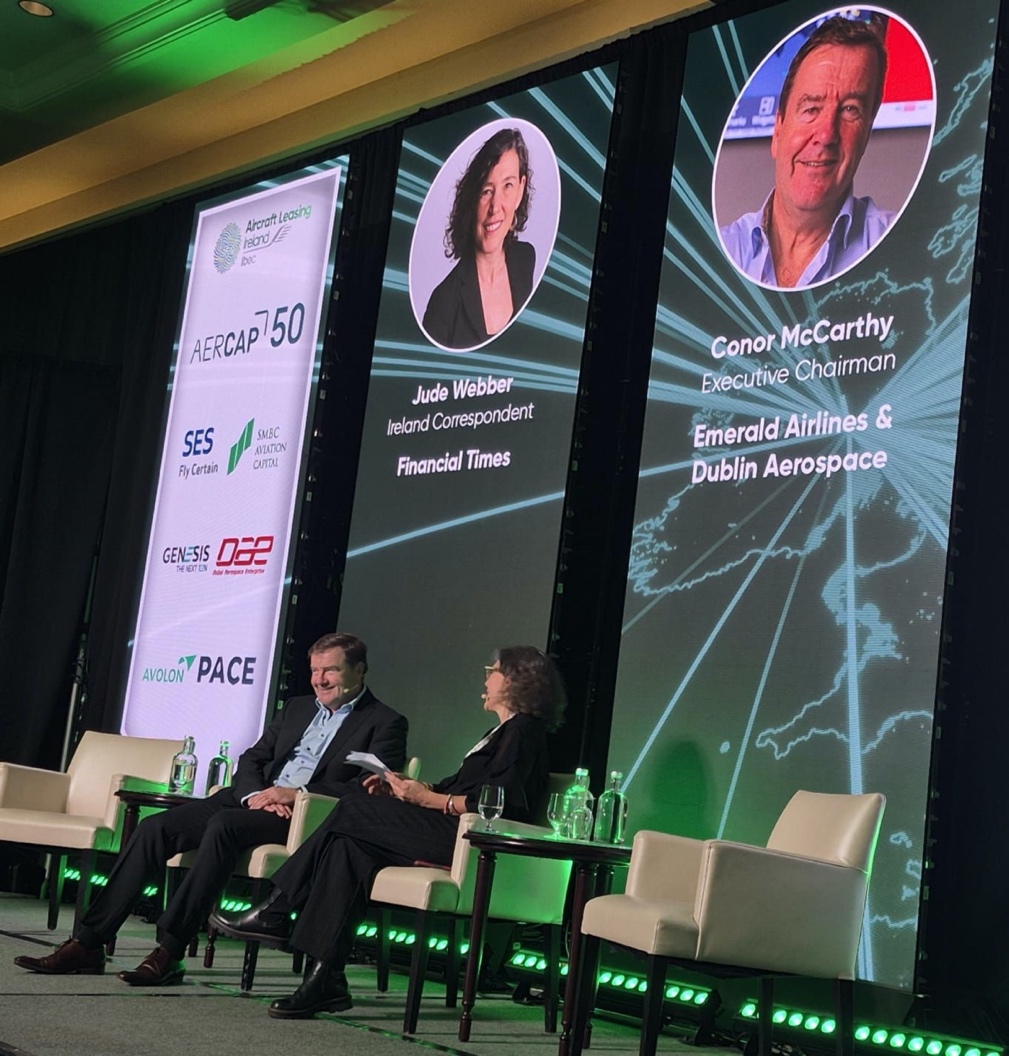
“Fireside” Chat
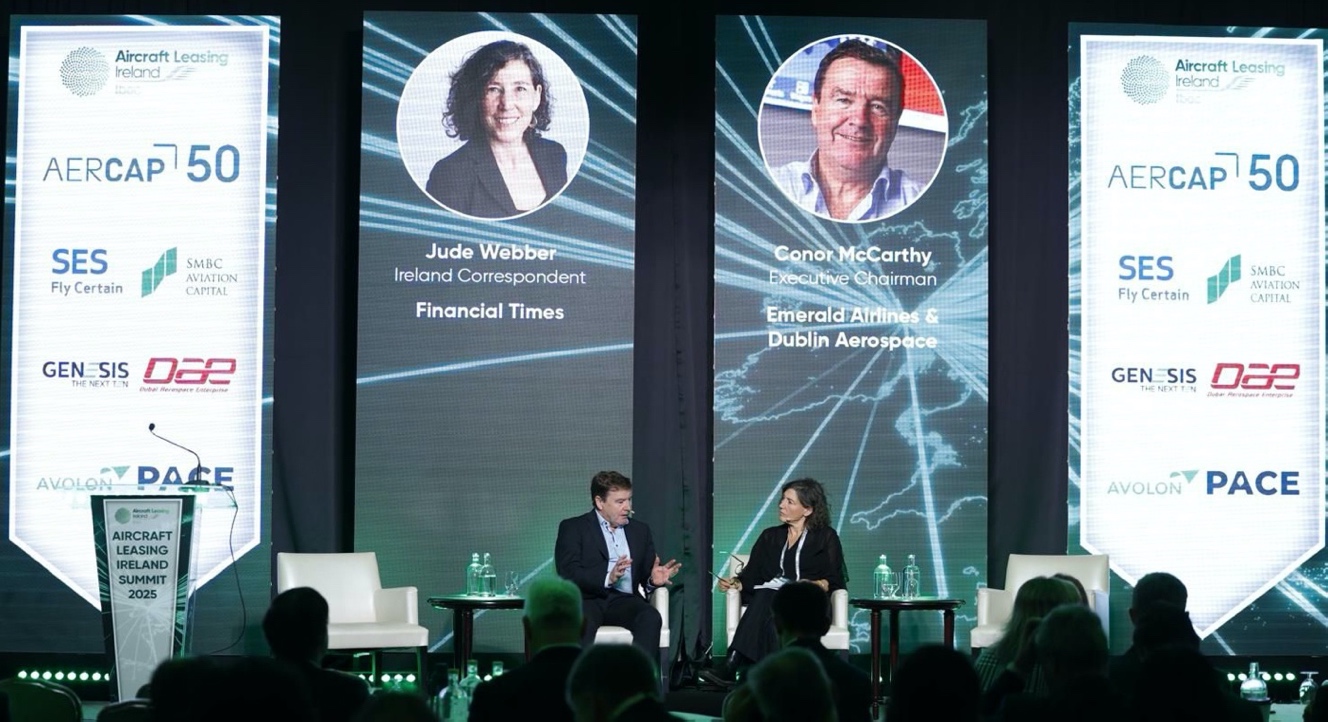
Conor McCarthy, Executive Chairman of Emerald Airlines and Dublin Aerospace, was in conversation with Jude Webber FT, addressing SAF mandates, plus the opportunities and skills shortages within the industry.
McCarthy said that there are not enough skilled people being trained as tradespeople. “While Europe and the rest of the world go after AI and technology and all those exciting things, core skills are not being replenished. In Dublin Aerospace, we found ourselves going abroad to Asia to recruit fitter and turners and bring them to our plants in Ashbourne. There just aren’t enough apprentices being produced in this country” he said.
McCarthy also raised the disparity between aircraft licenses in the UK-NI and Ireland, which he said was holding back the ‘all-island strategy’ outlined in a recent report by Irish aviation investment group Irelandia (read here). He said that “regulatory alignment” or a “recognition of qualifications across the island” would be “a huge breakthrough”, so that a Captain or an avionics engineer could operate and sign off on an aircraft in either jurisdiction, regardless of whether they are licensed in the Republic or the North of Ireland. “That has given us a huge overhead and huge additional costs to manage”.
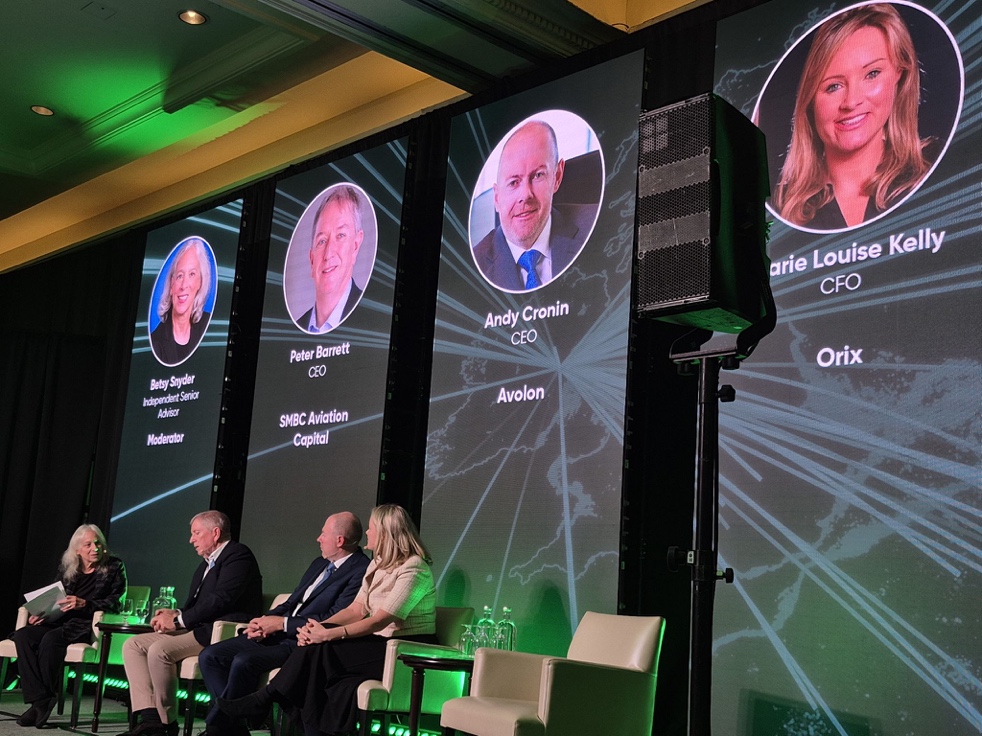
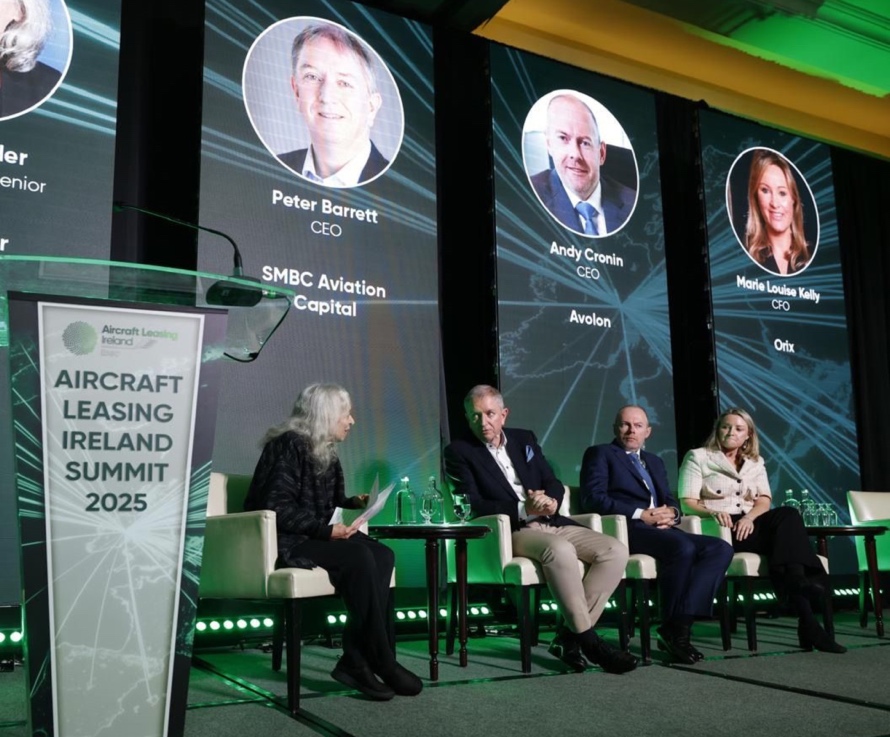
The third panel of the day “Executive Vision: Navigating Change and Opportunity” was moderated by Betsy Snyder CFA, Independent Senior Adviser. Betsy was joined by panellists Peter Barrett, CEO SMBC; Andy Cronin, CEO Avolon; and Marie-Louise Kelly CFO and Senior Executive Officer, Orix.
Themes included consolidation, aircraft shortages, and the policy support of the Irish Government. Barrett, of SMBC, said that delays to infrastructure and the Dublin airport passenger cap continue to cause issues for the industry. “An island economy that will constrain the number of passengers per airport, it just doesn’t make any sense,” he said. Quote: “We have the infrastructure and ecosystem here that makes Ireland a good place to do business”
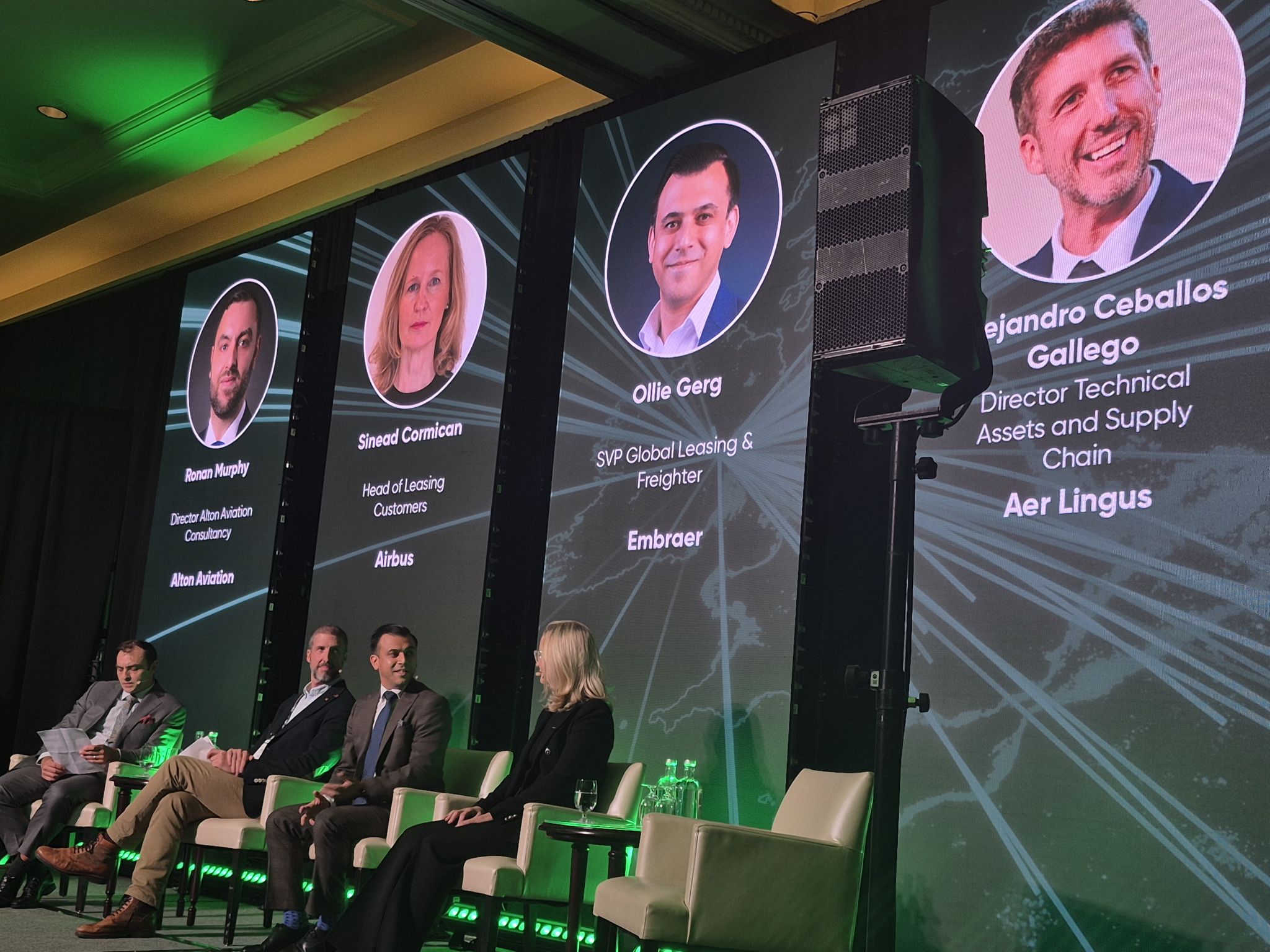
The fourth panel of the day OEMs “From Factory to Fleet: Perspectives Across the Aviation Supply Chain” was moderated by Ronan Murphy, Director, Alton Aviation Consultancy. Ronan was joined by Sinead Cormican, Head of Leasing Customers Airbus, Oliver Gerg, Embraer SVP Global Leasing & Freighter, and Alejandro Ceballos Gallego Director of Technical Assets and Supply Chain at Aer Lingus.
Together, they addressed how the supply chain (see authors report from Farnborough 2024 here) has been impacted and the industry’s resilience in the face of such challenges. Notably, New Gen engines are making steady but slow progress, affecting lessors and airline operations, including lower Time on Wing, driving higher costs: PW1100 Geared Turbofan recalls and disks reliability; in contrast, the CFMI LEAP now showing better production issues.
The rise of COMAC as a future narrowbody competitor to the Big Two was also discussed, and China’s investment in constructing all its own complex components, potentially breaking reliance on Western suppliers.
The Fifth Panel “Innovating to Accelerate Sustainable Aviation” reported on progress in SAF and the ongoing realities of decarbonisation costs for airlines. Moderated by Feargal Purcell, Head of Corporate Affairs at SMBC with speakers on the panel: Stephen Dooley, Trinity College Dublin, Dr. Alicja Gajewska Ryanair, Arnaud Namer, Atoba Energy, Melanie Astruc from Airbus and Bryan McKenna, Department of Transport.
The panel explored the sustainability imperative, from keeping SAF on the agenda to driving innovation that avoids fatigue and ensures long-term impact. Quote: “We need to find solutions that stitch the entire value chain”.
The last panel of the day, “The Human Factor, Powering Aviation’s Future” focused on Talent, developing a strong pipeline of skills to support leasing, MRO, and the wider aviation sector. Moderated by Roisin McArdie, CEO AerTalent, joined by Heather Diver MD of ACG; Maria Frost, HR elfc and Sarah Willis HR Genesis.
Skill gaps in trades like machine tool operators, as mentioned by Conor McCarthy, were again highlighted. As was the importance of a company culture: Willis: “Culture is just so important for staff retention and the morale of employees”
Recap
Firms that are members of Aircraft Leasing Ireland (ALI) and the groups of which they are part manage aircraft worth more than $315bn / €274bn, according to new data. This accounts for 69% of the value of all global leased aircraft.
The figures showcase the significant global reach and importance of Ireland’s aircraft leasing sector, as well as the progress being made on sustainability. ALI, the association representing aircraft leasing in this country, compiled and released the figures ahead of the summit.
In total, the firms manage some 9,500 aircraft and have over 2,300 aircraft currently on order. More than 95% of the aircraft on order are new-technology aircraft (more than 80% of them from Boeing or Airbus). Almost two-thirds, 62% of the firms’ fleet, by value, is accounted for by new-technology aircraft.
Whilst 41% of global aircraft are leased, the leased fleet accounts for 49% of the total value of global aircraft, underscoring how aircraft leasing is facilitating investment in new, more efficient technology. In total, ALI members and the groups of which they are part manage 64% of the global number of leased aircraft (9,504 out of 14,678), the figures show.
The Author gives thanks and credit to ALI for permission to reproduce photos and speakers’ agendas.