

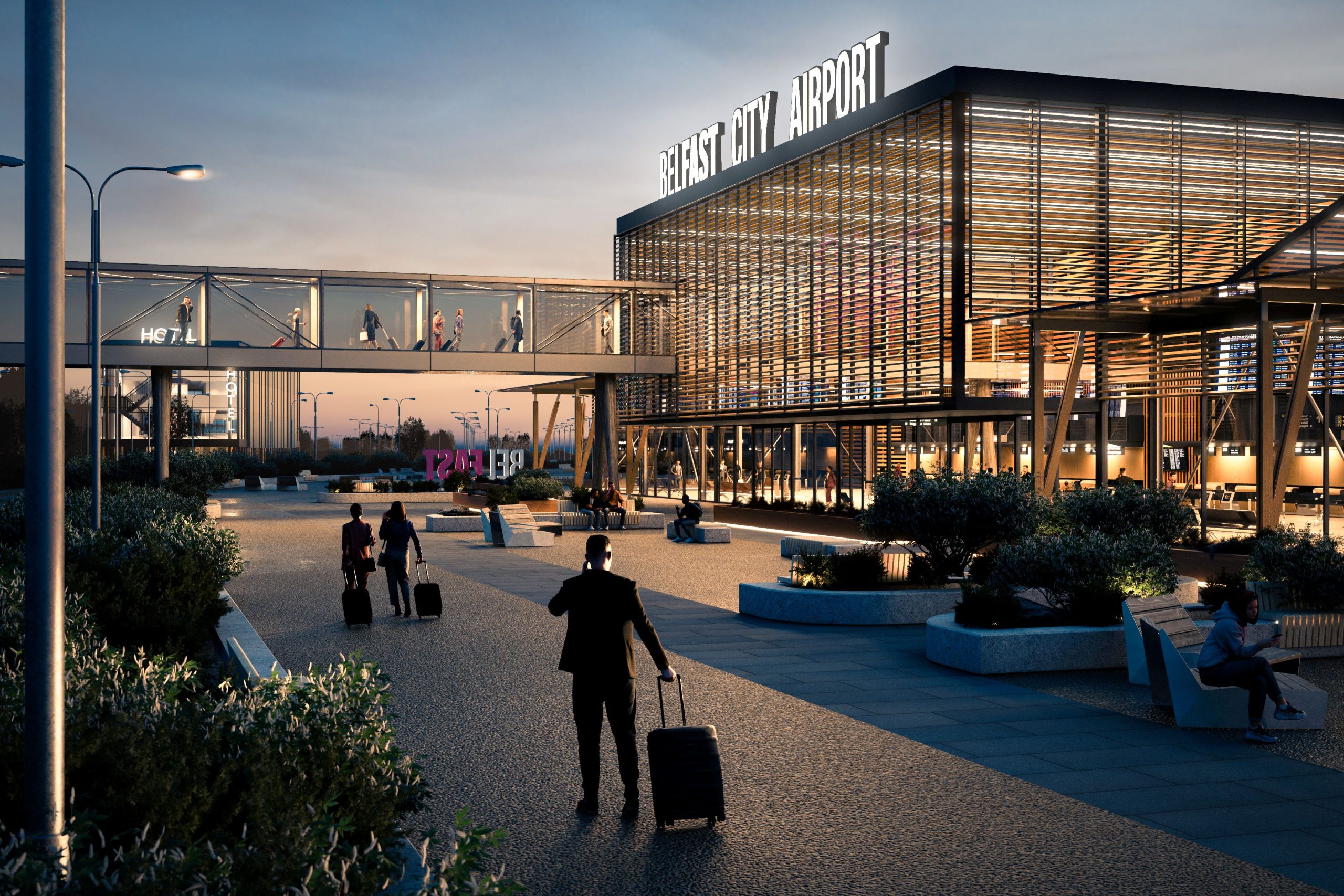
Belfast City Airport has unveiled its transformational draft Master Plan 2040, and will have the potential to unlock up to £200 million in private investment, support thousands of new jobs, and deliver a £1.7 billion injection into the Northern Ireland economy annually. The draft plan also shows an exciting opportunity to deliver a new rail halt to potentially become the first airport on the island of Ireland to be connected by rail. The airport is seeking views on its vision for growth over the next 15 years, which includes extended terminal and airfield facilities, surface access improvements, and complementary development, which could include a hotel and increased EV charging facilities.
Aviation analysts predict demand for air travel across the island of Ireland will double to 90 million passengers per year by 2040. That will require Belfast City Airport to grow to 7 million passengers over the same period, ensuring Belfast retains and expands its connectivity to the UK and Europe. The draft plan would double the airport’s workforce to over 2,200 and facilitate growth of its apprenticeship academy and award-winning community engagement programme. It would also accelerate key sustainability ambitions, including the airport’s journey to net zero.
Commenting on the plan, the Chief Executive of Belfast City Airport, Matthew Hall said, “Delivery of our Master Plan is a once-in-a-generation opportunity that will benefit passengers and businesses across the region, whilst delivering key elements of the Northern Ireland Executive’s Programme for Government. The economic benefits from delivery of our Master Plan will be significant. By 2040, we could generate £1.7billion in GVA for Northern Ireland and support over 23,000 jobs across the region, including over 1,100 new roles at the airport campus. Every airport on the island of Ireland will need to play its part in meeting future demand, and this draft Master Plan exemplifies Belfast City Airport’s commitment to doing so, while reinforcing our position as a vital economic enabler for the region. We want more passengers to arrive by public transport and leave their cars at home, hence a focus on greener journeys within the Master Plan. We’ve recently entered a pioneering public-private partnership with Translink to conclude a feasibility study for a new rail halt linking the airport with Belfast city centre on the Bangor line. We look forward to further exploring this initiative.”
Also commenting was the First Minister, Michelle O’Neill who said, “Belfast City Airport is more than just a gateway it is a major part of our economy. It supports hundreds of jobs, boosts local businesses, and helps drive tourism. This master plan shows great ambition and a really bold vision for the future. I look forward to seeing how this next chapter unfolds and the positive impact it will have on our people, visitors, and generations to come.”
Matthew Hall concluded: “If Belfast City is not able to meet growth in passenger demand, there will be constraints on Northern Ireland’s air connectivity which would frustrate ambitions to improve economic productivity, increase foreign direct investment, grow tourism and create more jobs through activity at the airport. We value and are seeking the views of our community on our draft Master Plan. We will consider all feedback before publishing the final plan early next year.”
The draft Master Plan is open for public consultation until 11 November 2025. The full document can be viewed at belfastcityairport.com/vision. Members of the public can submit their views within the dedicated website linked above, in writing, or by attending one of the forthcoming community engagement events:
- Thursday 2 October 2025 – Riddell Hall, QUB, South Belfast (2–4pm & 6–8pm)
- Thursday 9 October 2025 – Templemore Baths, East Belfast (2–4pm & 6–8pm)
- Thursday 16 October 2025 – Holywood Library, North Down (2–4pm & 6–8pm)

