


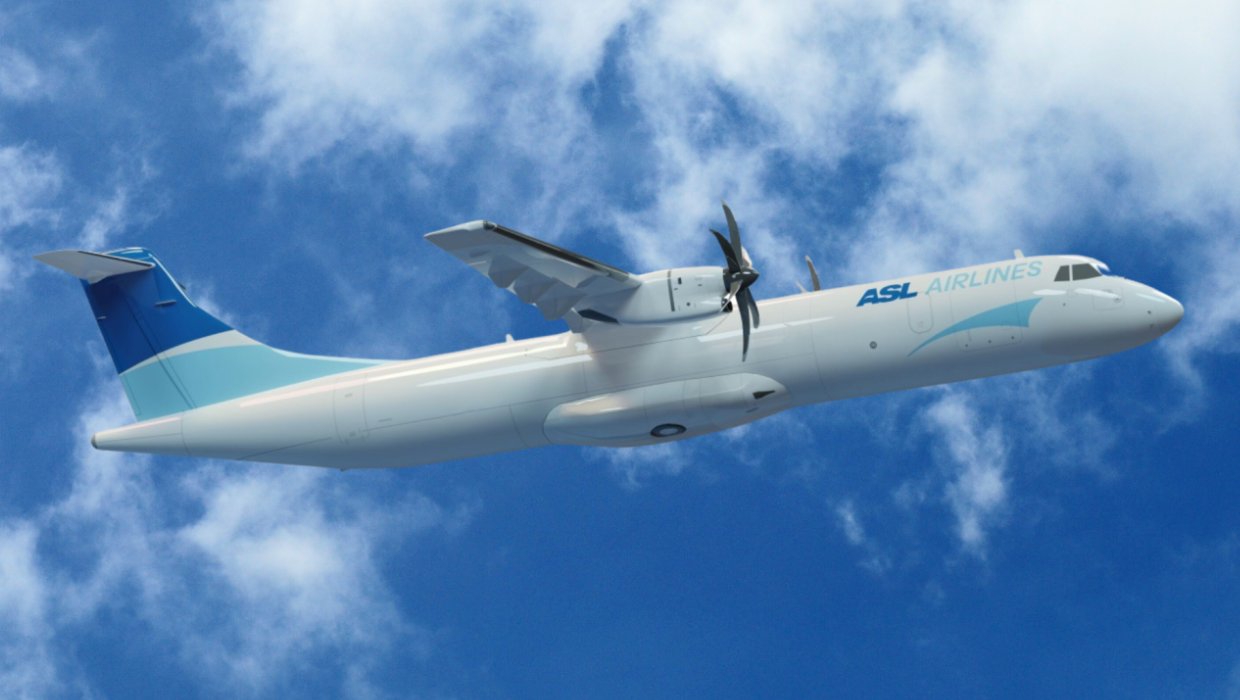
ZeroAvia recently announced that ASL Aviation Holdings has signed a conditional purchase agreement for up to 20 hydrogen-electric engines for retrofit into its operated fleet of ATR regional turboprop aircraft – creating some of the world’s first zero-emission freight aircraft of this scale.
The firm order of 10 engines, with a further option for up to another 10 and an agreement related to retrofit services, builds on an earlier MOU between the two companies announced in November 2021. ASL Aviation has now committed to paying deposits to secure delivery slots, further expanding ZeroAvia’s total number of delivery slots sold.
Hydrogen-electric engines use fuel cells to convert hydrogen fuel into electricity using an electrochemical reaction. With no combustion of fuel, there are no CO2 or other climate impacting emissions, save for low temperature water vapor. The electricity generated is then used to power electric motors which turn the propellers. Overall, it is estimated that fuel cell systems in aircraft could reduce in-flight emissions by around 90%. The systems will have the added advantage of lower maintenance costs for airline operators.
ZeroAvia has already successfully flown multiple test flights of a prototype 600kW system for 10-20 seat aircraft, with certification work already underway with regulators. The company has also demonstrated consistent technical progress in testing components for its 2-5 MW system (ZA2000) that will ultimately support aircraft within the ATR family, with ASL Airlines currently operating 13 such planes.
Exploring the potential for hydrogen-powered ATR freighter aircraft forms a core part of ASL’s wider ESG strategy, alongside reductions in existing Scope 1 and 2 CO2 emissions across its eight owned and joint venture airline brands. The company has also developed an industry forum – ASL CargoVision – together with leading new technology companies to raise awareness of innovative new technologies and sustainability for air cargo operations.
James Peck, Chief Customer Officer, ZeroAvia, said: “ASL is a major player in freight and beyond, and they are forging the pathway to a sustainable future for the industry, not least in leading in the adoption of new, zero-emission propulsion technologies. Our commercial agreements are crystallizing into firmer commitments and for those looking on, that should be a clear signal of the rapid and successful technical progress we are making to deliver clean propulsion systems.”
Robert Somers, Group Director Change Management, ASL Aviation Holdings, said: “ASL has always believed that new lower or zero emissions propulsion technologies would be deployed first in the air cargo market, and as such of our responsibility as a global leader to explore how technologies such as ZeroAvia’s hydrogen-electric engines can improve aviation sustainability. ASL’s ESG strategy commits us to reducing aviation carbon emissions, by working with industry partners like ZeroAvia and we see the use of their powertrains on ATR aircraft as a significant step forward on the road to aviation sustainability in the best interests of people and the planet”

