

Ryanair has issued a strongly worded response to the Dublin Airport Authority’s (daa) proposed €5.6 billion capital investment plan, urging the Irish Government to reconsider the scale and structure of the proposal amid concerns over costs and future airport charges. The airline argues that the plan, which it claims could lead to passenger fees rising from approximately €20 to €40 per departing passenger by 2031, risks undermining Dublin Airport’s competitiveness. According to Ryanair, the proposal would significantly increase costs without delivering sufficient additional capacity or infrastructure improvements. In a statement, Ryanair called on Taoiseach Micheál Martin to intervene, framing the proposal as excessive relative to its anticipated outcomes.
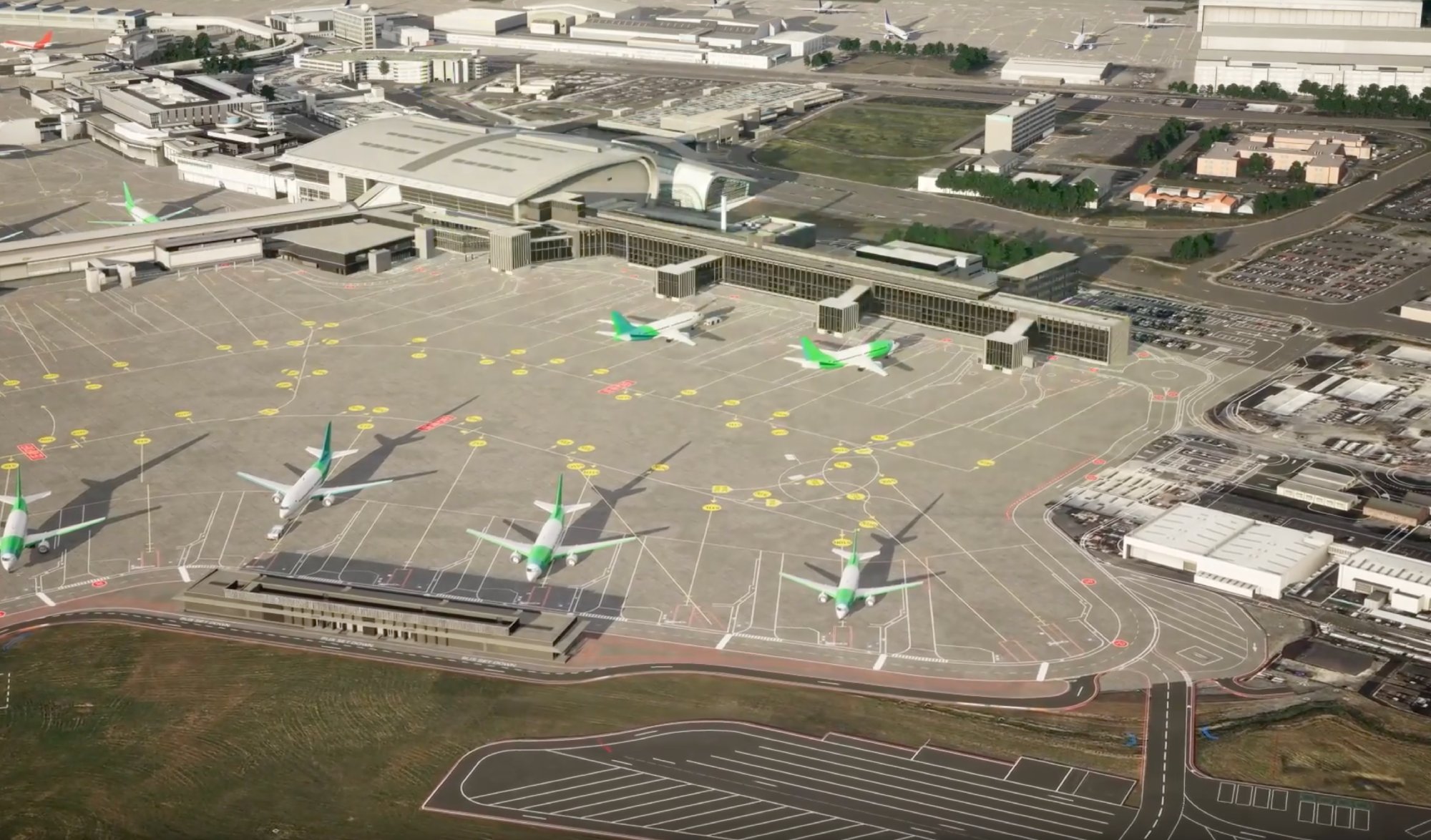
Ryanair’s critique focuses heavily on specific elements of the daa plan, including proposed works around Terminal 2 and Pier 1. The airline contends that the plan includes demolishing existing cargo and office facilities, assets that have already been funded, while investing heavily in relatively modest additions.
Among the issues raised are the construction of a new pier linked to Terminal 2, which Ryanair says would add only three widebody stands, as well as the addition of a third floor and airbridges to Pier 1. The airline maintains that such infrastructure would not align with its operational model, particularly as it accounts for a large proportion of traffic using Pier 1.
Ryanair has long positioned itself as an advocate for low airport charges to support route development and tourism growth. It argues that Dublin Airport has the potential to grow passenger numbers more cost-effectively by making better use of existing infrastructure, including its second runway, rather than pursuing large-scale capital expenditure. The airline suggests that more efficient investment could enable Dublin Airport to handle up to 60 million passengers annually at a fraction of the proposed cost, while keeping charges low and maintaining competitiveness with other European hubs.
Central to Ryanair’s statement is a call for stronger government oversight of airport development and pricing. The airline argues that, as a monopoly operator, the daa should be required to prioritise efficiency and cost control, rather than large-scale spending programmes that could ultimately be passed on to airlines and passengers.
Michael O’Leary, CEO of Ryanair, expressed the airline’s position in characteristically direct terms: “Airlines and passengers should not be forced to pay for the DAA’s €5.6bn ‘waste’ plan – a 640-page lunatic proposal designed to ‘game’ the regulatory system to double DAA’s passenger fees by 2031 while delivering zero growth at Dublin Airport. The DAA don’t need to waste 2x the cost of a Children’s Hospital, just so they can raise prices.”
He also highlighted specific cost elements within the plan: “Spending over €1bn to demolish buildings (that were already paid for by airlines) to add just three widebody stands is indefensible, as is spending €700m to add a 3rd floor and airbridges to Pier 1 when these won’t be used by Ryanair who deliver over 80% of Pier 1 traffic.”
O’Leary further criticised allocations for ancillary items: “Not to mention spending €146m on a bus stop, €61m on EV chargers, €7m on wildflowers, €640m for inflation and €870m for ‘contingencies’ – just in case the DAA get it wrong yet again.”
Ryanair’s statement also included pointed criticism of government leadership. While such language reflects the airline’s well-known communication style, it underscores the growing tension between airlines, airport authorities, and policymakers over how best to plan for Ireland’s aviation growth.
O’Leary concluded with a call for decisive political action: “This DAA plan is just more wasteful spending that Micheál ‘Do Nothing’ Martin is presiding over… Micheál ‘Do Nothing’ Martin should now ‘do something’ to block the DAA’s indefensible €5.6bn ‘waste’ plan. Stop DAA doubling passenger fees, and require the DAA to deliver low-cost, efficient airport facilities that supports lower fares, and more traffic, tourism, and jobs growth for Ireland.”

