


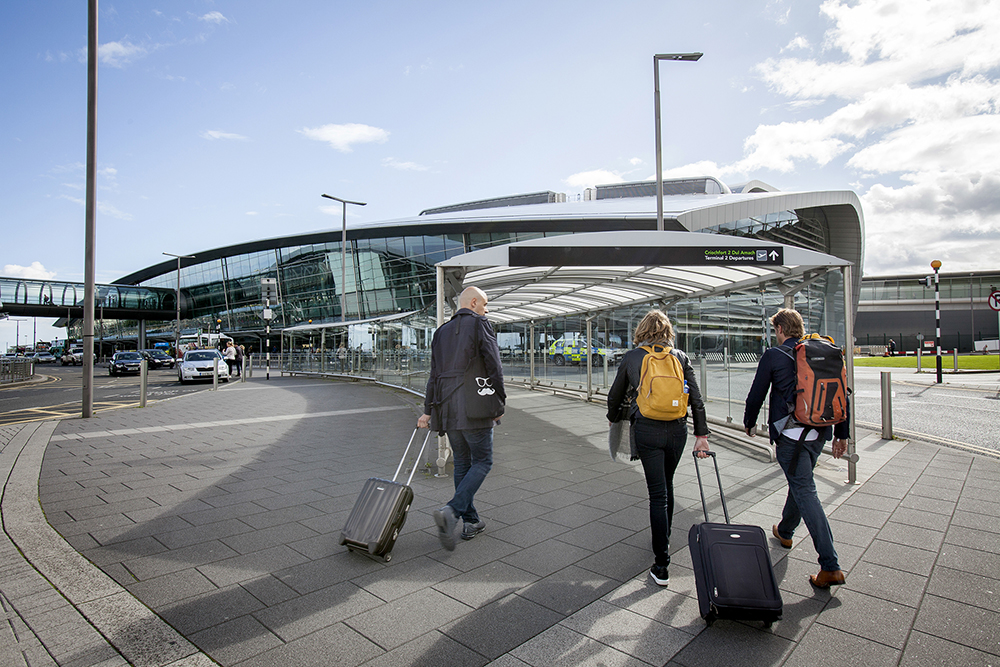
More than 36 million passengers (36.43m) travelled through Dublin Airport in 2025, the airport’s busiest ever year. This represented a +5.1% increase on the 2024 numbers, demonstrating the continued high demand for travel through Ireland’s national hub airport. The total number included 1.7 million transfer passengers, which was -3% on the previous year. While total passenger numbers climbed to record heights, so too did independently measured passenger satisfaction scores, which increased consistently throughout 2025 to sit at all-time high levels. December contributed more than 2.7 million passengers to the final tally, up +13% on the same month in 2024. This sharp increase reflected the suspension by the High Court of the seat restrictions that were in place the previous December due to the airport cap. Ten days in December 2025 saw more than 100,000 passengers passing through (versus zero in December 2024). The busiest day in the month was Sunday, December 28, when 114,735 people travelled through (+17% versus the busiest day in December 2024).
2025 in Detail
The number of passengers going through Dublin Airport has increased by 46% since 2015.
The year included a total of 215 days with more than 100,000 passengers, representing 59% of the year and a 25% increase on 2024.
Dublin Airport facilitated a total of 255,000 flights in the year, an increase of 5% on 2024.
Punctuality of flights departing on time from Dublin Airport improved for the fourth year running in 2025 to 71% – up 3% on 2024. When it comes to the first wave of departures, 85% of flights left on time, up 1% on last year.
The top destinations in the year were: 1. London Heathrow; 2. Amsterdam; 3. Manchester; 4. London Stansted; and 5. London Gatwick.

Commenting on the success of the 2025 figures, the Dublin Airport Managing Director, Gary McLean, paid tribute to Dublin Airport’s hard-working staff for delivering such reliable standards for passengers during the airport’s busiest ever year. Maintaining standards at such consistently high levels during the busiest year in our 85-year-history is a testament to the commitment and hard work of the Dublin Airport team. The airport operation ran smoothly throughout the year, with 97% of passengers passing through security in less than 20 minutes, boosted by the rollout of new best-in-class security scanning technology across both terminals. Go back 10 years, and Dublin Airport had never handled more than 100,000 passengers in a single day. Fast forward to 2025, and 3 out of every 5 days saw 100,000+ passengers moving through our terminals, while we also recorded our busiest ever day on Sunday, 10th August, when 130,427 passengers went through smoothly. Our terminals and road network handled those numbers comfortably, helped by the continued progress in encouraging passengers to use non-private car methods to get to and from the airport, with more than half using public transport.”
He went on to say, ”The strong passenger numbers in 2025 are indicative of the huge demand that’s there to fly in and out of Ireland and also of the importance of ensuring that Dublin Airport, as the island’s main gateway, has the capacity and infrastructure needed to meet the needs of our fast-growing population. Transatlantic activity was strong in 2025, with numbers processed by our US pre-clearance facility in Terminal 2 exceeding 2 million in a 12-month period for the first time ever. Dublin Airport has room to accommodate higher numbers of passengers in the years ahead, but it is essential that we soon start building new gates, stands, and other infrastructure to set us up to meet the demand that’s coming over the coming decades – and removing the passenger cap is key to that happening. We are encouraged by the progress being made by the Minister for Transport in introducing new legislation, which will see the cap removed, and its inclusion this week in the Spring Legislative Programme, while daa continues to work with other stakeholders to progress its Infrastructure Application through the planning system.”

