


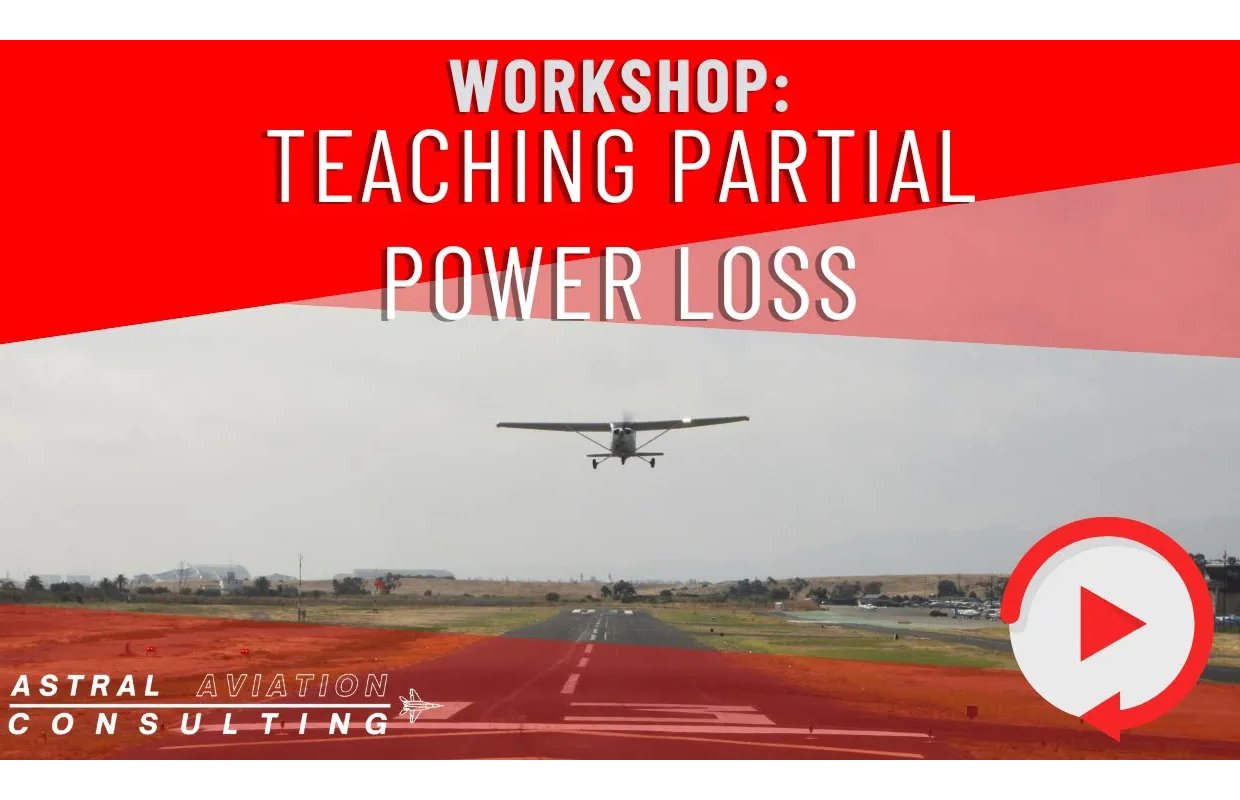
Astral Aviation Consulting, a UK-based company that have been contracted to produce safety information on behalf of the UK CAA, held a webinar last week to cover the topic of Partial Engine Failures. The topic is driven by changes to the UK flying licence syllabi that are due to come into effect from 1st October. While the licensing references will not be relevant to the majority of Irish pilots, the webinar provides some very useful insight into the management of partial engine failures. You can watch the webinar below.
EASA has been slightly ahead of the UK in that they have required partial power failures to be part of the refresher training flight for LAPL and SEP holders (PPL/CPL/ATPL) since February this year. However, there are currently no changes to the LAPL or PPL syllabi. All pilots are now required to complete mandatory exercises as part of their refresher training flight; the relevant requirements are referenced below.
For holders of Single Engine Piston (SEP) ratings, the updated text from EASA says:
Flight training items should be based on the exercise items of the proficiency check, as deemed relevant by the instructor, and depending on the experience of the candidate. In any case, the flight training items should include exercises related to the recognition of and the recovery from the following scenarios:
- simulated loss or partial loss of engine power during different phases of flight;
- selection of different stall scenarios (as specified in Exercise 2.3 of the table in point (5) of Section B of Appendix 9).
For LAPL holders, the wording is slightly different, but the intent is the same:
Flight training items should be based on the exercise items of the proficiency check, as deemed relevant by the instructor, and depending on the experience of the candidate. In any case, the instructor should select scenarios from the following list and include the relevant recognition and recovery exercises in the flight training:
- clean stall;
- approach to stall in descending turn with bank with approach configuration and power;
- approach to stall in landing configuration and power;
- approach to stall, climbing turn with take-off flap and climb power; and
- simulated loss or partial loss of engine power during different phases of flight.

