


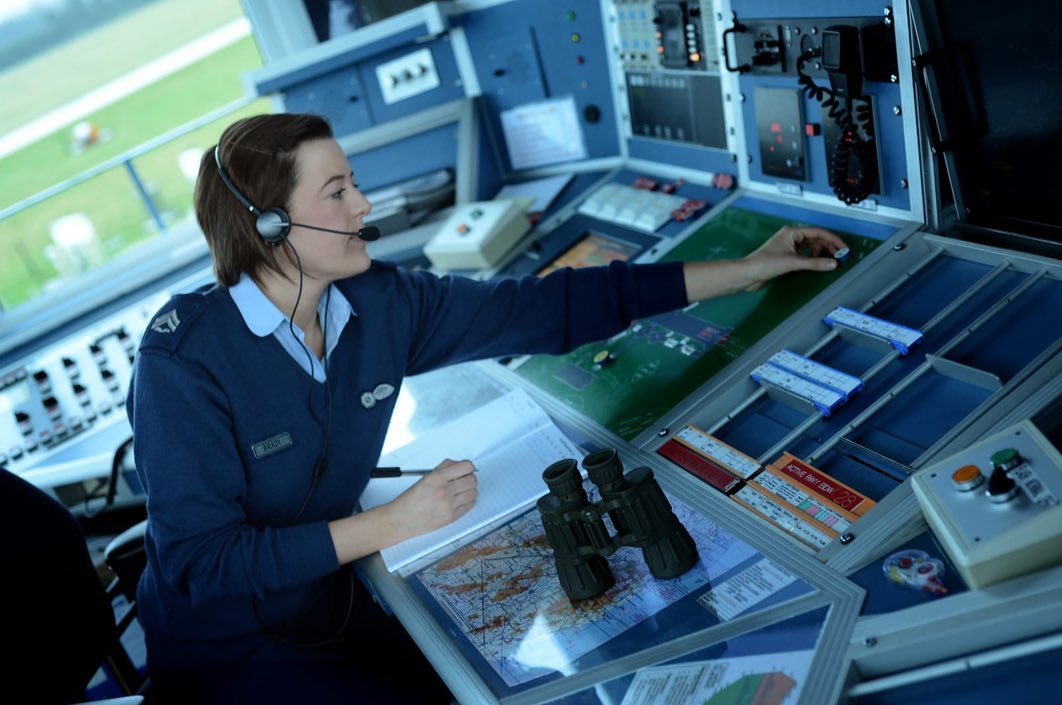
The Irish Air Corps has launched a recruitment campaign for qualified and experienced air traffic controllers, offering a rare opportunity for civilian ATCOs to join the military through a direct entry pathway.
The competition is aimed at licensed controllers who already hold recognised air traffic control qualifications and experience, allowing them to enter the Air Corps as Direct Entry Air Traffic Services Officers rather than progressing through the traditional cadet training route. The positions are based at Casement Aerodrome, Baldonnel, the home of Irish military aviation.
According to the Defence Forces, successful applicants will receive specialist training to transition into the military environment before joining a team responsible for supporting Air Corps operations both in Ireland and within controlled military airspace.
As an Air Traffic Services Officer, controllers will be responsible for directing fixed-wing and rotary-wing military aircraft operating on training and operational missions. Duties will include controlling traffic operating to and from Casement Aerodrome and working alongside civilian colleagues as Military Radar Controllers at the Dublin ATC Centre, helping military aircraft integrate safely with civilian traffic operating throughout Irish airspace.
The Defence Forces are seeking candidates who already possess substantial professional experience. Applicants must hold a valid military or European air traffic controller licence with an Aerodrome Control Surveillance (ADC/SUR) or Aerodrome Control Instrument (ADI) rating and have at least three years’ experience exercising that endorsement. An English Language Proficiency certificate at Operational Level 4 or higher is also required. Candidates must be eligible to live and work in Ireland, satisfy security clearance requirements, pass an aero-medical examination and military fitness assessment, and be under 50 years of age at the end of the competition year.
The recruitment drive comes as the Defence Forces continue efforts to strengthen air traffic services capability within the Air Corps. Earlier this year, the Minister for Defence confirmed that a competition for direct entry air traffic controllers was being progressed alongside ongoing training of Air Corps ATC personnel.
While aviation careers in Ireland are often associated with airlines, airports and commercial air navigation services, the Air Corps role offers a distinctly different operational environment. Controllers may find themselves supporting military training flights, emergency operations, state transport missions, maritime patrol aircraft and helicopter operations from the Defence Forces’ principal air base.
For qualified controllers looking for a new challenge, the competition represents one of the few opportunities to apply existing ATC qualifications directly within a military aviation setting while serving as an officer in the Irish Defence Forces.
Applications and full eligibility details are available through the Defence Forces careers website.

