


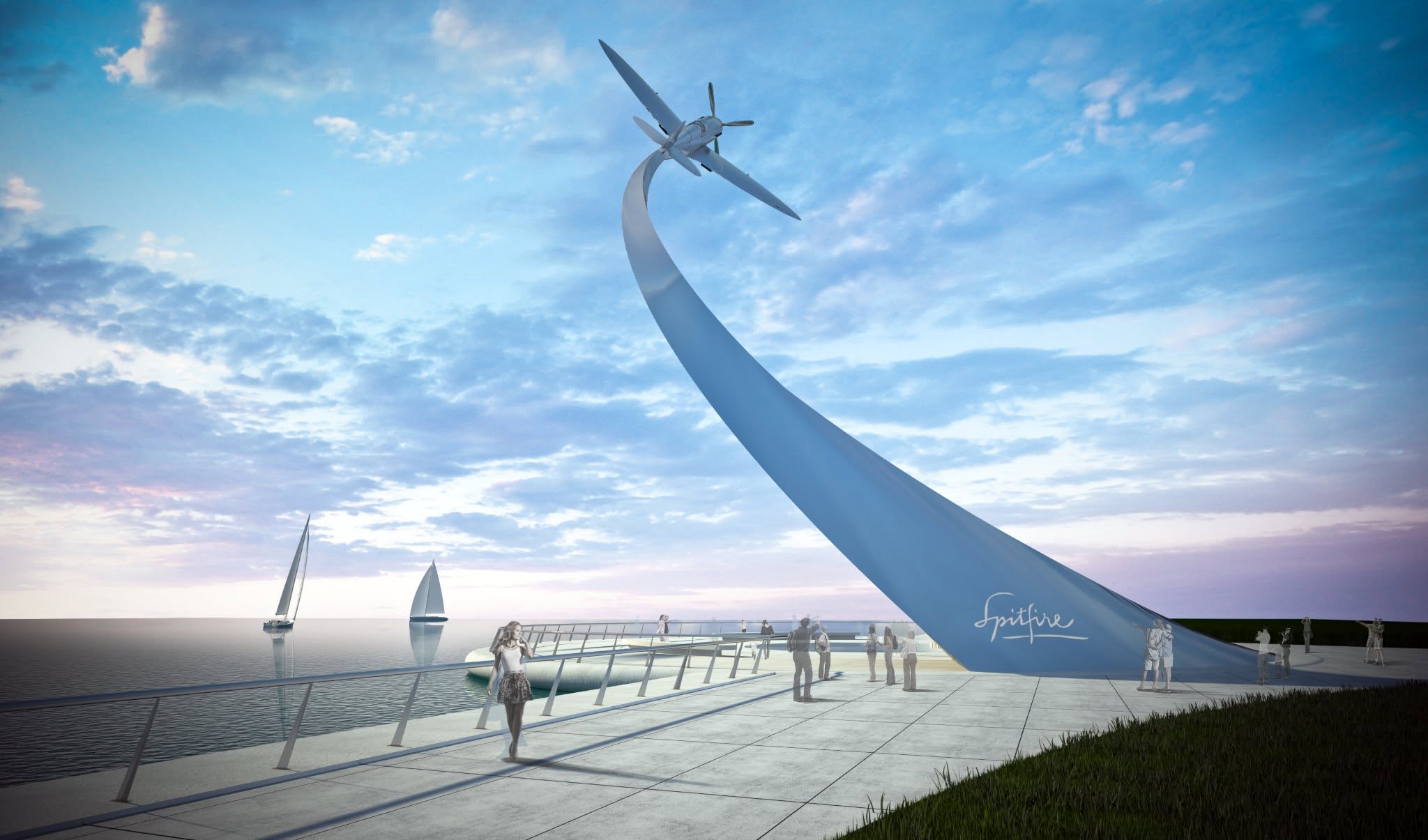
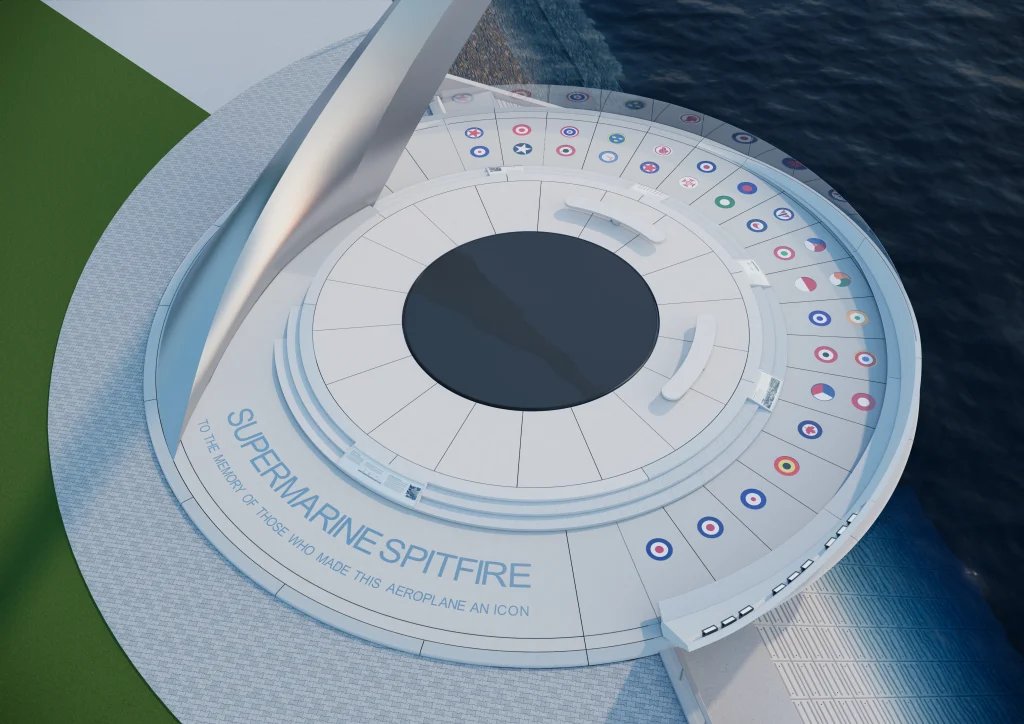
A striking new National Spitfire Monument planned for Southampton’s waterfront will celebrate one of the most iconic aircraft ever built. Rising 40 metres above Mayflower Park, the monument will feature a stainless-steel Supermarine Spitfire at one-and-a-half times the size of the original aircraft, climbing skywards on a sweeping curved structure representing a vapour trail. Around the monument’s base will be roundels representing the 30 nations that operated the Spitfire during its service life, including the distinctive insignia of the Irish Air Corps.
For Irish aviation enthusiasts, the inclusion of the Irish Air Corps roundel is particularly significant. While the Spitfire is often viewed purely through a British lens, Ireland has its own unique chapter in the story of this legendary fighter.
The Aircraft Born in Southampton
The Spitfire was designed by Reginald J. Mitchell at Supermarine in Southampton and made its maiden flight on 5th March 1936. During the Second World War it became synonymous with the defence of Britain and later served with air forces across Europe, the Middle East, Africa and Asia. More than 20,000 examples were built and the aircraft remained in military service in some countries well into the post-war era.
The proposed monument seeks to recognise not only the aircraft itself, but also the engineers, factory workers, pilots and ground crews who contributed to the Spitfire’s remarkable legacy. The National Spitfire Project describes it as a symbol of courage, innovation and international cooperation.
Ireland’s Spitfires
Less well known is that Ireland became a Spitfire operator after the war. The Irish Air Corps acquired a number of Spitfire Mk IX fighters from 1947 onwards, equipping No. 1 Fighter Squadron at Baldonnel. These aircraft provided Ireland with a modern fighter capability at a time when much of Europe was rebuilding after the conflict. The type served with distinction in Irish markings until 1961, when it was finally replaced by the de Havilland Vampire.
For generations of Irish aviators, the Spitfire represented the pinnacle of piston-engine fighter design. Photographs of Irish Air Corps Spitfires carrying the green-white-orange roundels remain among the most evocative images in Irish military aviation history.
That is why the decision to include the Irish Air Corps roundel alongside those of the RAF, Royal Canadian Air Force, Royal Australian Air Force and the many other nations that flew the Spitfire is such a welcome gesture. It recognises that the aircraft’s story extends far beyond the country in which it was designed.
A Truly International Memorial
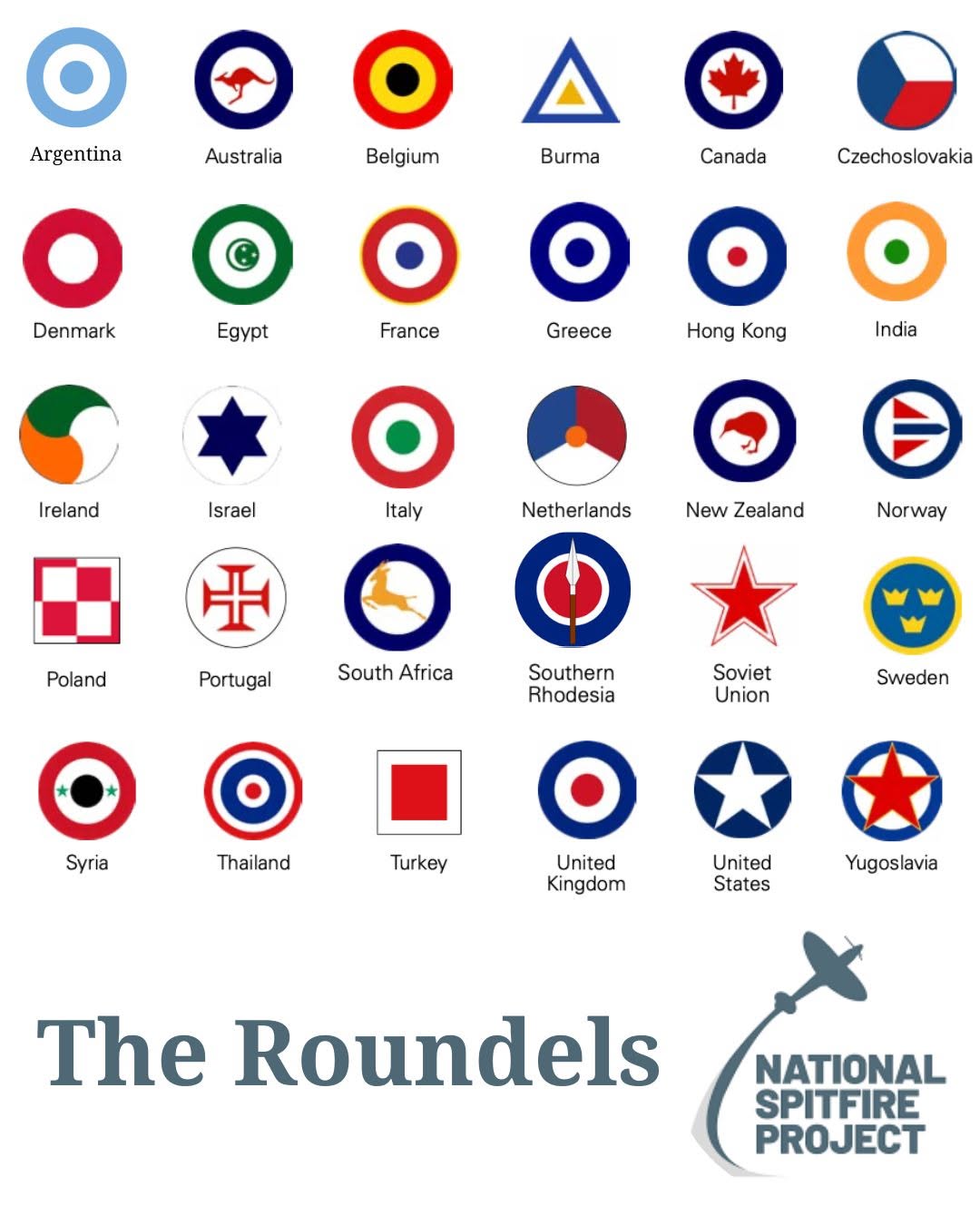
One of the most interesting features of the new monument is its emphasis on the global impact of the Spitfire. Thirty roundels will be incorporated into the monument’s circular plinth, each representing a nation that operated the aircraft. Visitors will be able to walk around the memorial and appreciate the worldwide reach of a design that originated on Southampton’s waterfront but went on to serve around the globe.
For Irish visitors to Southampton, finding the Irish Air Corps roundel among this collection will provide a reminder of Ireland’s own place in aviation history and the role the Spitfire played in the development of military aviation here at home.
The monument has already received planning approval and fundraising continues. When completed, it is expected to become one of Southampton’s most recognisable landmarks and one of the largest aviation-themed sculptures in the world. The aircraft itself will be a 1.5-scale Mk Vc Spitfire mounted atop the soaring stainless-steel vapour trail structure, facing out over Southampton Water.

