


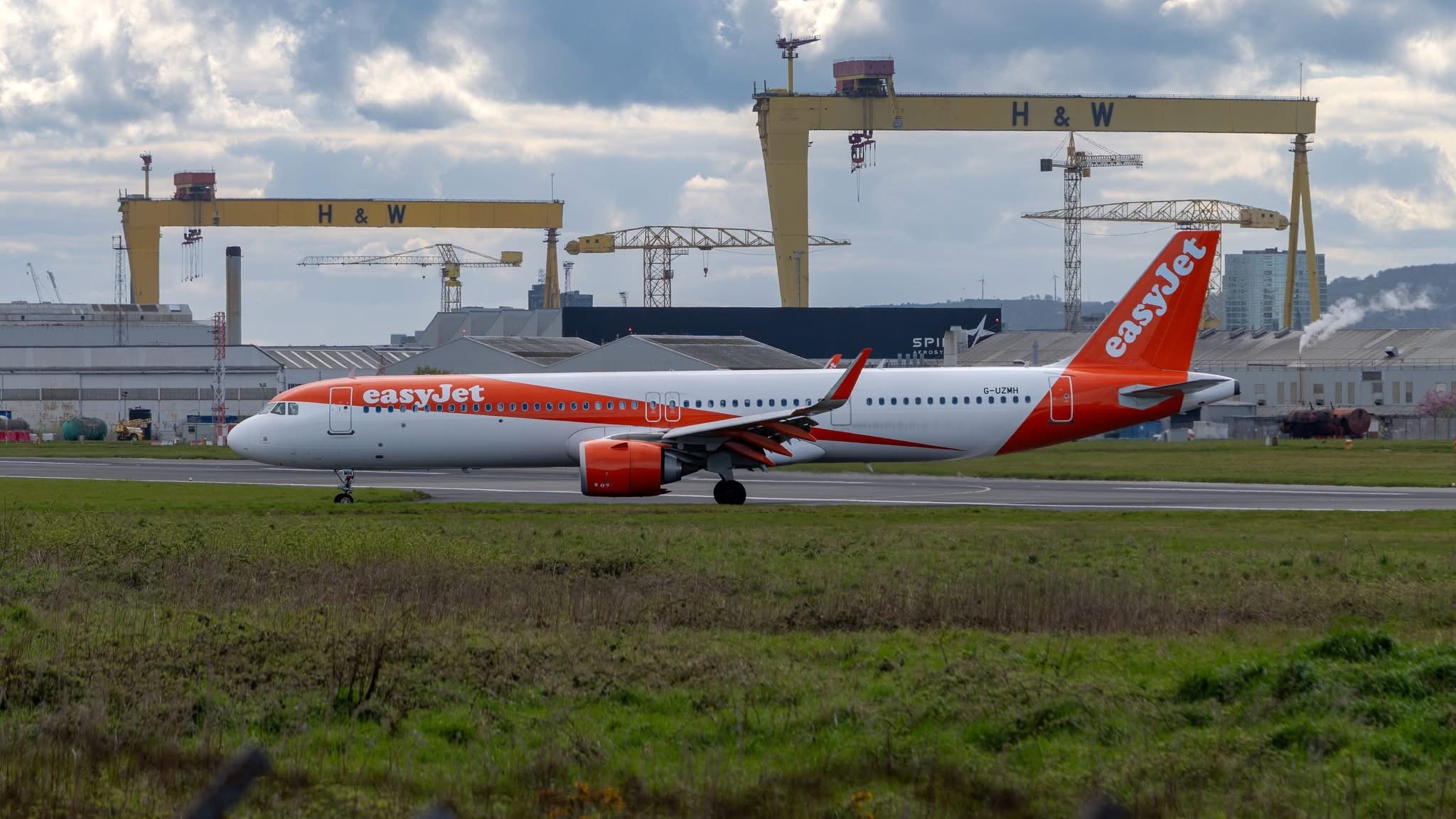
The Northern Ireland Department for the Economy has recently launched a consultation on a regional aviation policy for the North as part of its Programme for Government 2024.
The consultation period ends on 22nd May, and the public is being invited to engage with the process in order to chart a way forward for the growing aviation sector.
The Ministerial Foreword states that the ambition is “to strengthen domestic and international connectivity,” while acknowledging that civil aviation in Northern Ireland remains a ‘reserved’ matter (i.e. controlled almost entirely by the UK government). This constraint makes the consultation exercise a fairly frustrating one, as those in the north’s aviation industry have had little success in the past in effecting meaningful change.
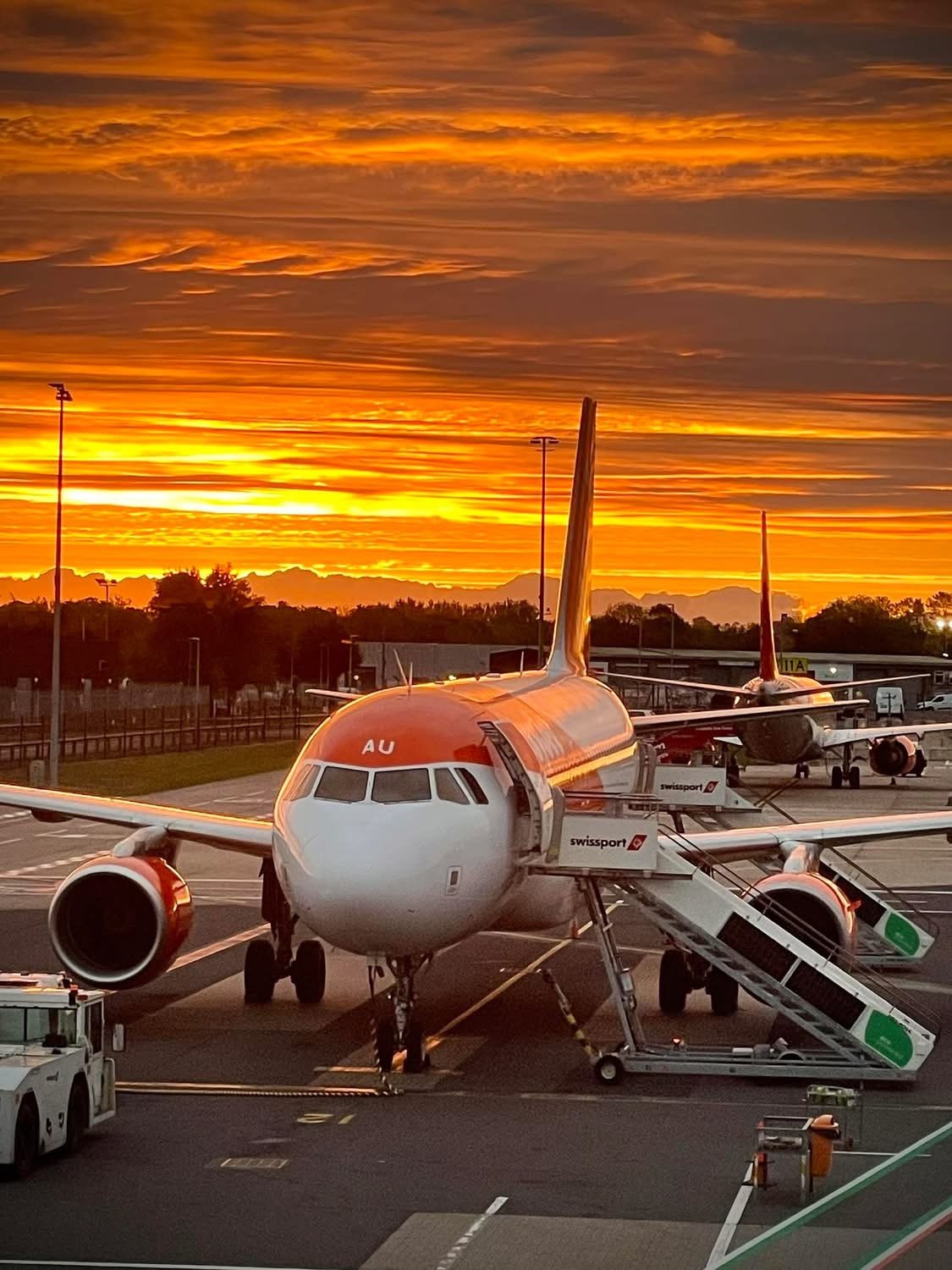
Air Passenger Duty (APD) is one example of where the industry has been up against the proverbial ‘brick wall’. Knowing that the abolition of this travel tax would boost passenger traffic, it is understandable that airlines flying out of Northern Ireland find the operating environment here to be more difficult than it should be. Appeals to the UK Treasury over the years have been largely unsuccessful.
For the Northern Ireland Executive, any attempt to deliver real change to its civil aviation sector is likely to be an uphill struggle. However, the minister is determined that Northern Ireland should have its own regional aviation policy despite the constraints. Developing new routes, supporting the three airports to achieve a level playing field within the all-Ireland context are the main objectives of her government department.
Passenger traffic handled at Northern Ireland’s three airports was 9.3 million in 2025, similar to 2024. More importantly, it is up on the pre-pandemic 2019 year by 3.6% overall.
Recovery from the lockdown years has been sluggish and inconsistent and has taken longer in Northern Ireland than in the Republic. Unsurprisingly, it has been the International airport that has driven the recovery, having handled 6.4% more passengers in 2025 than in 2019. The airport accounts for 72% of all passengers in Northern Ireland, but has relatively few long-haul routes.
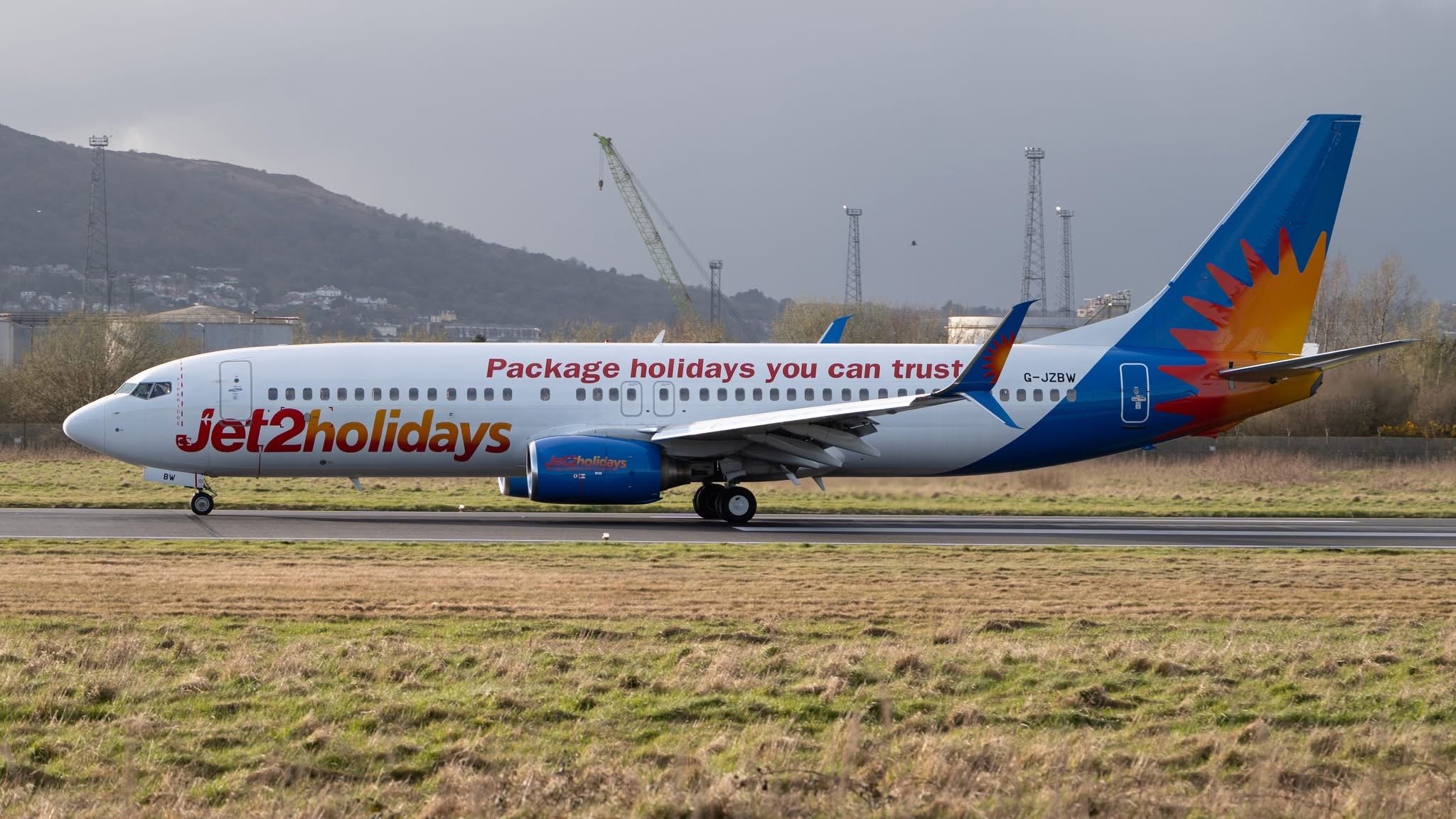
The consultation document refers to this shortcoming as a core issue and has an ambition to fully restore scheduled transatlantic services, which may be challenging considering the checkered history of transatlantic flights out of Belfast.
The fact that Northern Ireland cannot sustain even one transatlantic route (all year round) is a touchy subject in business circles. If the department can achieve success on this issue alone, it will be a major breakthrough and symbolically very important for the minister with the economic portfolio.
US investment in Northern Ireland is significant. There are around 180 US companies operating in Northern Ireland, employing roughly 24,000 people in finance and technical industries. Belfast has had the lion share of these important jobs for the past 25 years but direct flights to the US have not been sustained. The most recent operators, United Airlines and Norwegian, abandoned their US routes due to poor financial performance.
In the case of United, there was dismay when it ended its daily service to New York in 2016 just months after it received a £6 million rescue deal from the Northern Ireland Executive. The rescue was blocked by the EU Commission, that said EU rules did not permit public authorities to grant a specific airline an “undue advantage.” The rescue deal money was ultimately paid back, but the episode did create negative publicity for Northern Ireland plc. It was the end of an eleven-year run with Continental Airlines launching the route in 2005, before United took over in 2012, only to axe it four years later.
Norwegian Air attempted to make a go of the route in 2017 but abandoned it after just one year, citing poor “customer demand.” Its decision led to acrimony between the airline and Belfast International with the airport accusing Norwegian of “channeling much greater levels of Northern Ireland passengers on to Dublin flights.” (Norwegian was operating to an airport 70 miles from New York, which went down badly with some passengers). The competitive issue regarding Dublin is the main focus for The Executive’s Department for the Economy.
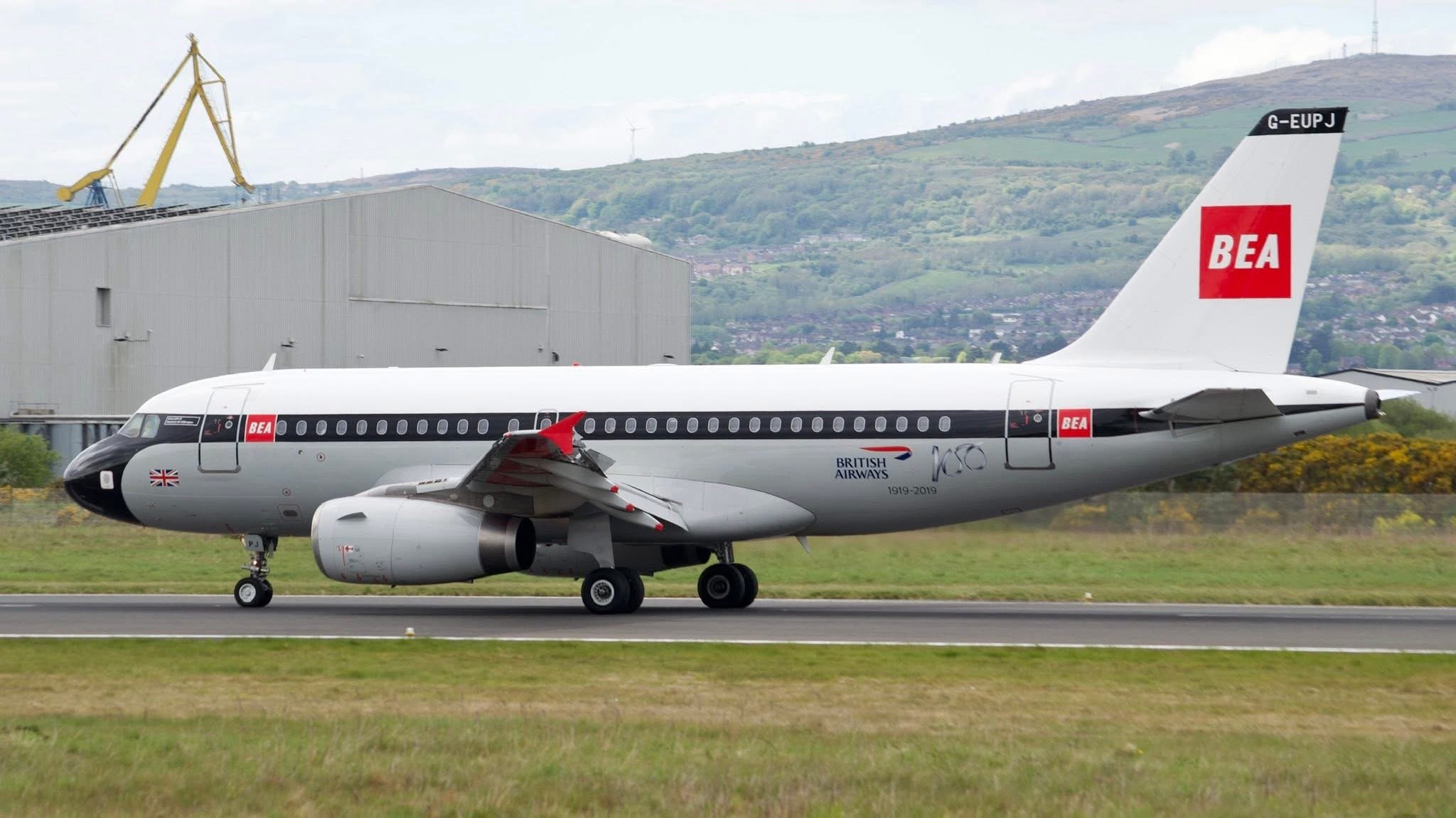
It will not be an easy task to revive transatlantic services from Belfast. It has taken Glasgow seven years to get a (summer only) New York connection reinstated, not helped by the fact that Edinburgh has a number of well-established transatlantic routes.
The consultation document states that the department “will work with the UK government to support the pre-clearance between Belfast International and the US. This is the preferred strategy to be adopted but the minister does acknowledge that transatlantic flights must be in place before pre-clearance can be explored.
The only airports in Europe that have US border pre-clearance facilities are Dublin and Shannon. None exist in the UK. For US-bound passengers out of Ireland, Dublin especially has a massive advantage. It attracts vast numbers of passengers from Northern Ireland and even other parts of the UK.
The fact that no UK airport has such facilities will not make it easy for Belfast to be the first. The challenge would be considerable as the process for implementation is known to be slow, due to the high costs, space requirements for separate terminals and the various intergovernmental agreements which can be complex. The UK government would have to be involved and for the Northern Ireland Executive, this would just be another hill to climb. In essence, the Northern Ireland Executive can only do so much to support and help develop the north’s three airports.
On Route development, the consultation document states that: “Subject to the department’s budgetary position, the department will work with our partner organisations to identify financial incentives to support new or maintain existing air routes. The department is also committed to ongoing support for cooperative marketing campaigns.”
The more recent high-profile forms of support by the Executive in Northern Ireland have been in the PSO funding of the Derry/Heathrow service and its commitment to underwrite the running costs of the north-west airport for the four-year period 2025 to 2029. Unlike the Belfast airports, City of Derry is not in private ownership.
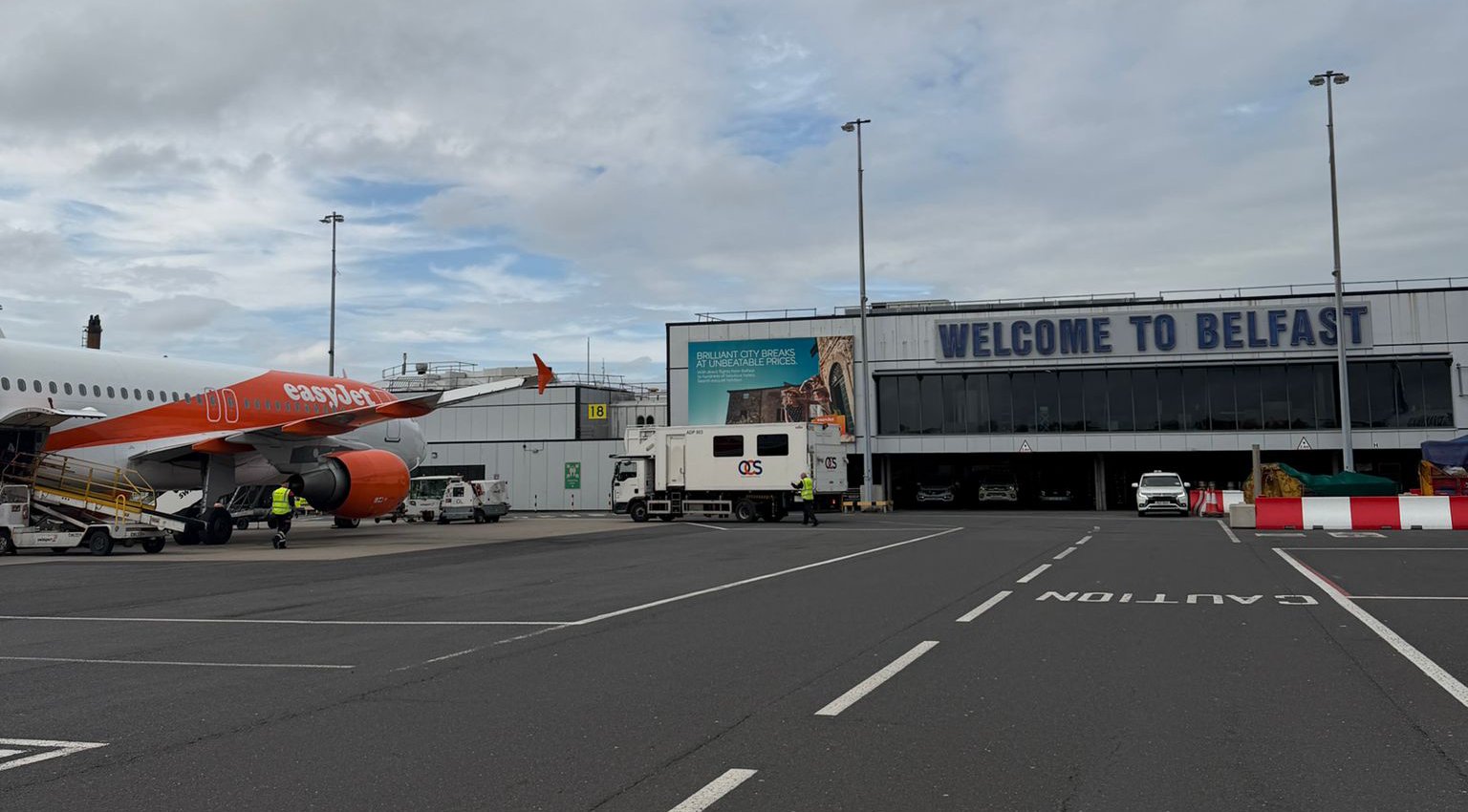
Some time ago, Ben Lowry, the editor of the influential News Letter, wrote a hard-hitting article on Northern Ireland’s airport policy, with the headline: “As Dublin soars, NI keeps its shambles of an airport policy”
He compares the current NI policy to that of the Republic of Ireland, where
“some simple infrastructure decisions have reaped dividends” Lowry believes there is no reason for Northern Ireland to have three airports, pointing out that Dublin has only one airport, despite being about twice the size of Belfast which has two. Also, Dublin Airport’s location north of the city, serviced by both the M1 and M50 motorways, means that someone travelling from Belfast literally has a motorway “to the door.”
Lowry firmly believes that Dublin’s success is down to having ‘critical mass’ – enough customers to generate more and more business. “If NI had a chance of being a minor rival to Dublin, it would need to have a single airport, located where the International airport is now, at Aldergrove.” He sees no logic in the NI air passenger market being split across three locations and the government policy of grant-aiding the City of Derry airport.
Despite the fact that Lowry loves using Belfast City Airport, he acknowledges that although the downtown facility might be best for him personally, what would be best for NI would be a single NI hub airport, handling upwards of ten million passengers per year. In that scenario he believes that the International could start winning back some of the Dublin bound passengers from NI.
In acknowledging that pre-clearance is a huge advantage, there are still other infrastructural improvements that would help the case for concentrating government investment at Aldergrove. He suggests a motorway connection, which is a “no brainer,” The approach road to Aldergrove is a minor road, unchanged from when the airport opened in
1963. Lowry also feels that a rail connection would help, especially as there is a mothballed line that runs very close to the airport. Experts on this subject maintain that to justify having a railway halt at the International, there would need to be at least ten million passengers using the airport annually. With Northern Ireland having handled 9.3 million passengers in total in 2025, it is not unreasonable to assume that with just one airport in the North, the ten million passenger target would be within striking distance.
Recognising that Donegal is within the NI catchment area when it comes to air travel, Lowry suggests a dual carriageway link to Letterkenny to make the International airport more attractive. All Lowry’s points are valid. However, Northern Ireland is a complex political entity, For any of his proposals to work “we would need political unity,” he says, adding, pessimistically: “No chance. Our politicians prefer all -things-to-all-men.”
The consultation process will undoubtedly take time, not made easy by the inevitable conflicting interests that exist in Northern Ireland. The minister intends setting up an Aviation Advisory Group “to develop a shared regional vision for aviation and future route development.” The department also plans to commission research into preparing a case for the UK government to consider abolishing APD for Northern Ireland. It also intends commissioning independent research into another thorny issue – to evaluate “broader impacts of the Duty Free issue.” (Passengers leaving Northern Ireland on EU trips cannot buy Duty Free – a fallout from Brexit) Herein lies the problem for the Northern Ireland Executive. It is not a master over its own destiny. It depends on both the UK government and (for now) the European Commission to ultimately shape its aviation policy. It has virtually no tax-raising powers of its own, so is almost entirely reliant on funding from the UK Exchequer.
It does have scope under existing legislation to deal with infrastructure matters such as providing land for airports, roads access, airport equipment and buildings for airport operations. As far as all the other big issues are concerned, the minister wants Northern Ireland to have a stronger voice when dealing with the ultimate decision-makers across the Irish Sea. This is the start of what could be a long and difficult process.
The consultation documents are available to read here.
Photos by Michael Mc Elroy, Ellen Casey, David Mc Allister and Jacob Bushe.

