


By Declan Hasson
The Irish government’s Department of Transport has recently been seeking the views of potential passengers and stakeholders on its plan to deliver air connectivity between Dublin and Derry, based on a Public Service Obligation (PSO).
In its public consultation document “Market Sounding Survey”, it acknowledged that Ireland’s north west corner is relatively underserved by transport connectivity. There is no rail network whatsoever in that corner of Ireland and the road network can best be described as ‘basic’ or ‘lacking.’
As part of the government’s “Building our Shared Island” objectives, there is now a commitment to engage with all relevant stakeholders to establish air connectivity between Dublin and Derry airports. It is hoped that a service might be up and running by the end of this year. The case for the revival of the Derry to Dublin route (it has been tried many times before) has been strengthened by the failure to get the proposed upgrade to the A5 road started.
This major road scheme, announced in 2007, promised to greatly improve the journey experience from Derry to Aughnacloy on the Monaghan border, with much of the scheme being a dual carriageway. Effectively, the road from Derry to Dublin was to become a mixture of dual carriageway and motorway. The road has often been in the headlines for many tragic reasons in recent years, and it has deterred many motorists from ever making what is a long and sometimes challenging journey.
Despite the funding commitments from both governments back in 2007, the road scheme has never started due to endless legal challenges by opponents to the plan in Northern Ireland. There is very little confidence that this vital road project will happen in the short to medium term. Many sceptics believe it may not even happen in the long term.
Currently, the journey by car from Derry to Dublin Airport averages around 3.5 hours. By bus, it can take anywhere from 4 to 4.5 hours. For people living in East Donegal and Inishowen, the journey is even longer. People living in that part of Ireland feel very disconnected from their capital city. It is for these reasons that an air service linking Derry with Dublin has taken on an added sense of urgency.
For people in West Donegal, there is the option to fly to Dublin from Carrickfinn. Aer Lingus Regional (Emerald Airlines) do operate a twice-daily rotation to the picturesque airport on the Atlantic coast. However, the catchment area is quite limited due mainly to the poor road network away from the coast in that corner of Donegal.
Despite the fact that Donegal Airport is very small, it does recommend a hefty one hour and twenty minutes minimum check-in before departure to Dublin, which is not the most attractive of selling points. Long check-in times at both airports do take the shine off what most passengers expect should be a fairly short “hop.”
The most attractive aspect of the Donegal service has to be the current published fare of around €80 return. This fare will undoubtedly be the benchmark for potential users of the proposed Derry/Dublin service.
The key objectives of the government’s “Market Sounding Survey” are to:
- Inform potential passengers of the government’s commitment to deliver a PSO-funded air service between Dublin and Derry
- Publish a competitive request for tenders
- Identify suitable carriers
- Identify details of passenger behaviour and demand
- Identify the most suitable aircraft type, capacity, frequency, timing and Fare structures
- Identify the challenges
And there will be plenty of challenges as history invariably tells us!
The key issues for most passengers will be fares, timings and aircraft type. These were the issues with all previous attempts to successfully establish the Derry/ Dublin route. Passenger expectations on fares for short feeder flights are always optimistic but sometimes unrealistic. The problem for any potential operator of this relatively short route is that passengers will expect the fare to reflect the brevity of the journey.
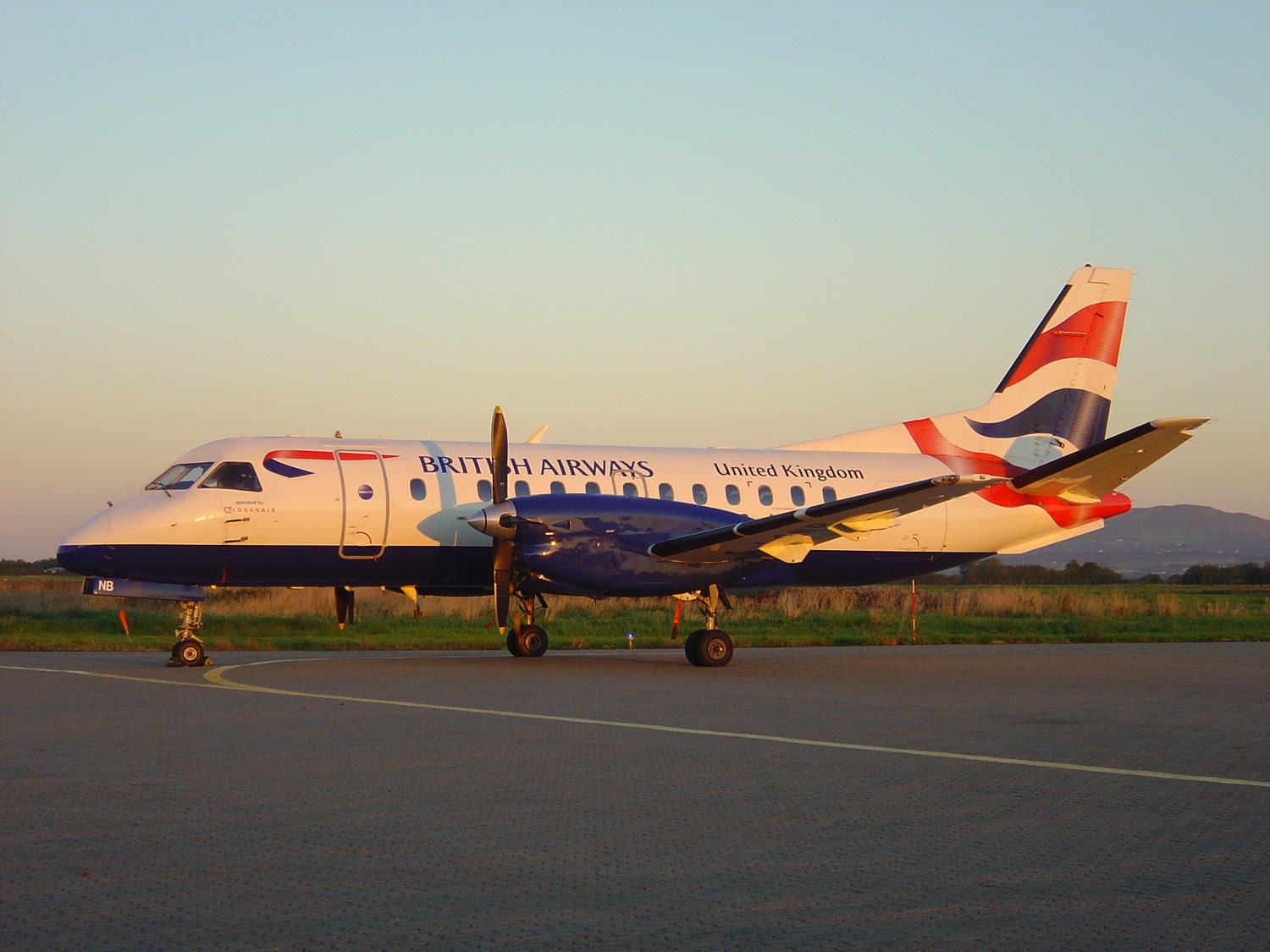
The route has history, and no previous operator has survived on it for long. The best was the PSO fundedLoganair (as aBritish Airways franchise) service, which lasted eight years. Most other attempts survived for only two or three years; some never lasted even one year.
The history, in chronological order, is as follows:
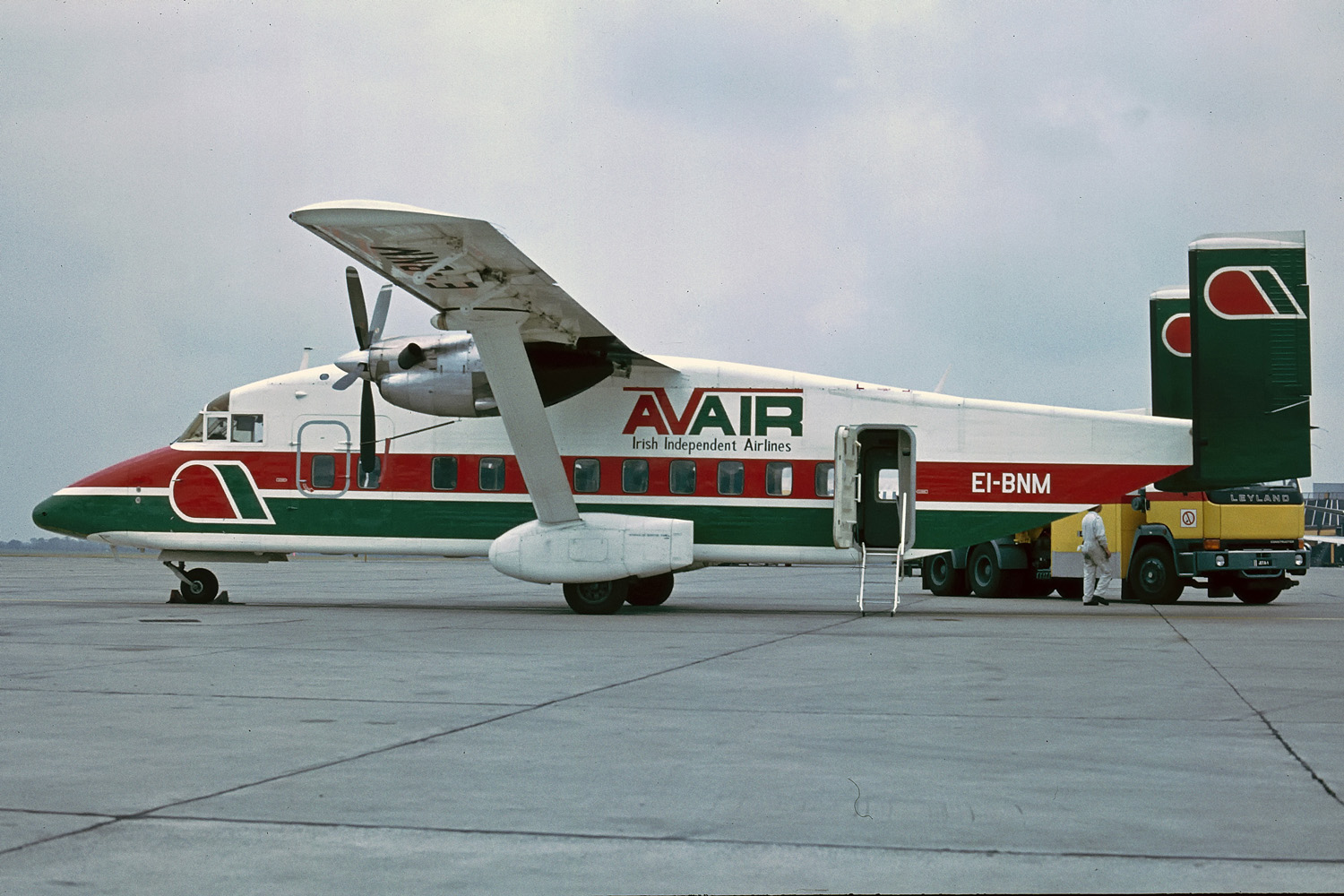
- 1981 to 1984 – New start-up Irish airline Avair operated a twice-daily rotation using twin-engined Beechcraft mainly. The airline had built up a small domestic network, gradually introducing Shorts 330 equipment, but collapsed in its third year of operations.
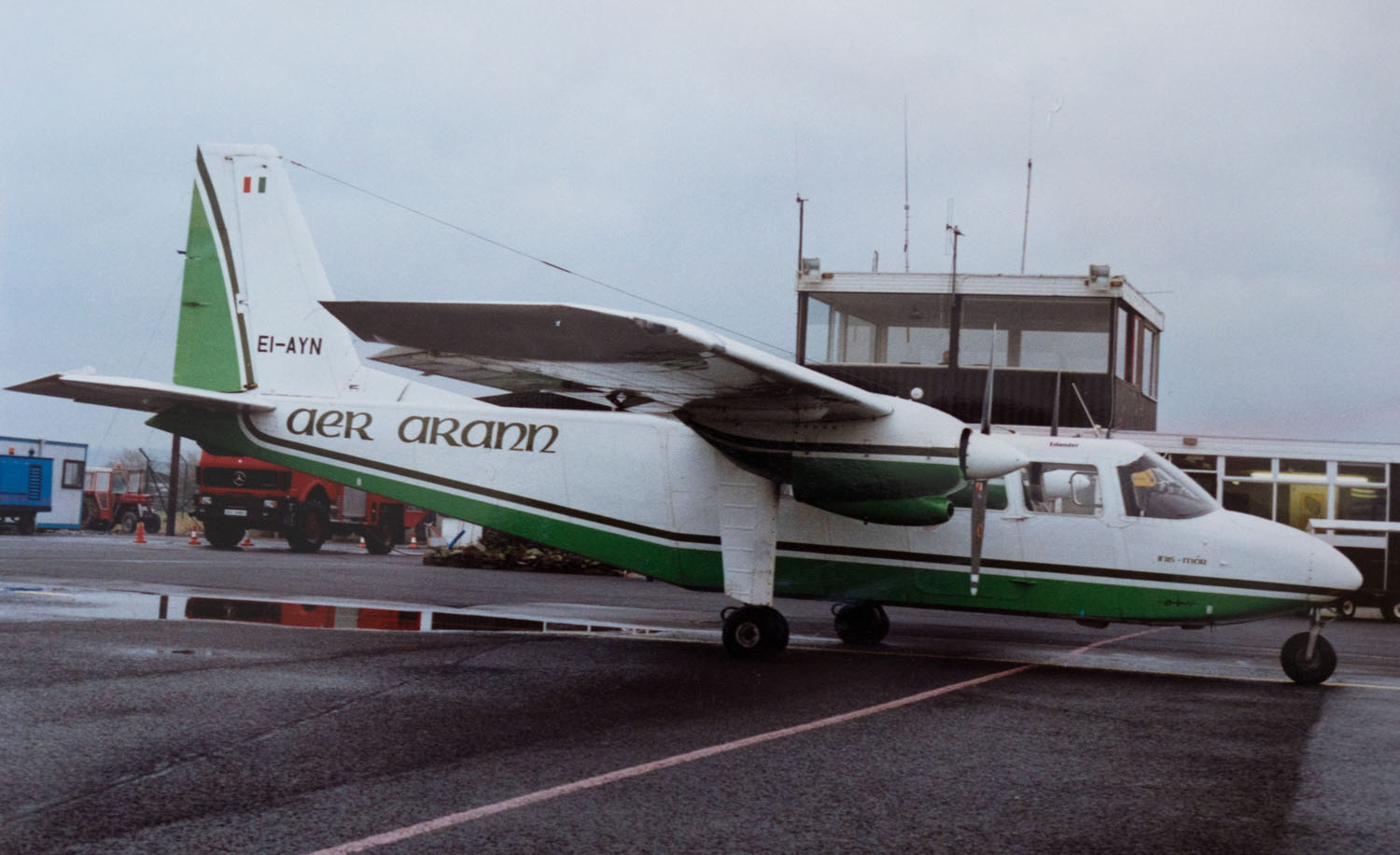
- 1985 to 1986 – Aer Arann restarts the Dublin service using Islanders, but it lasts just one year.
- 1986 to 1987 – Shannon Executive Aviation revives the service using Metroliners but again fails to survive beyond its first anniversary.
- 1988 – Iona National Airways takes on the Dublin route using Embraer Bandeirante aircraft, but abandons the service after just nine months.
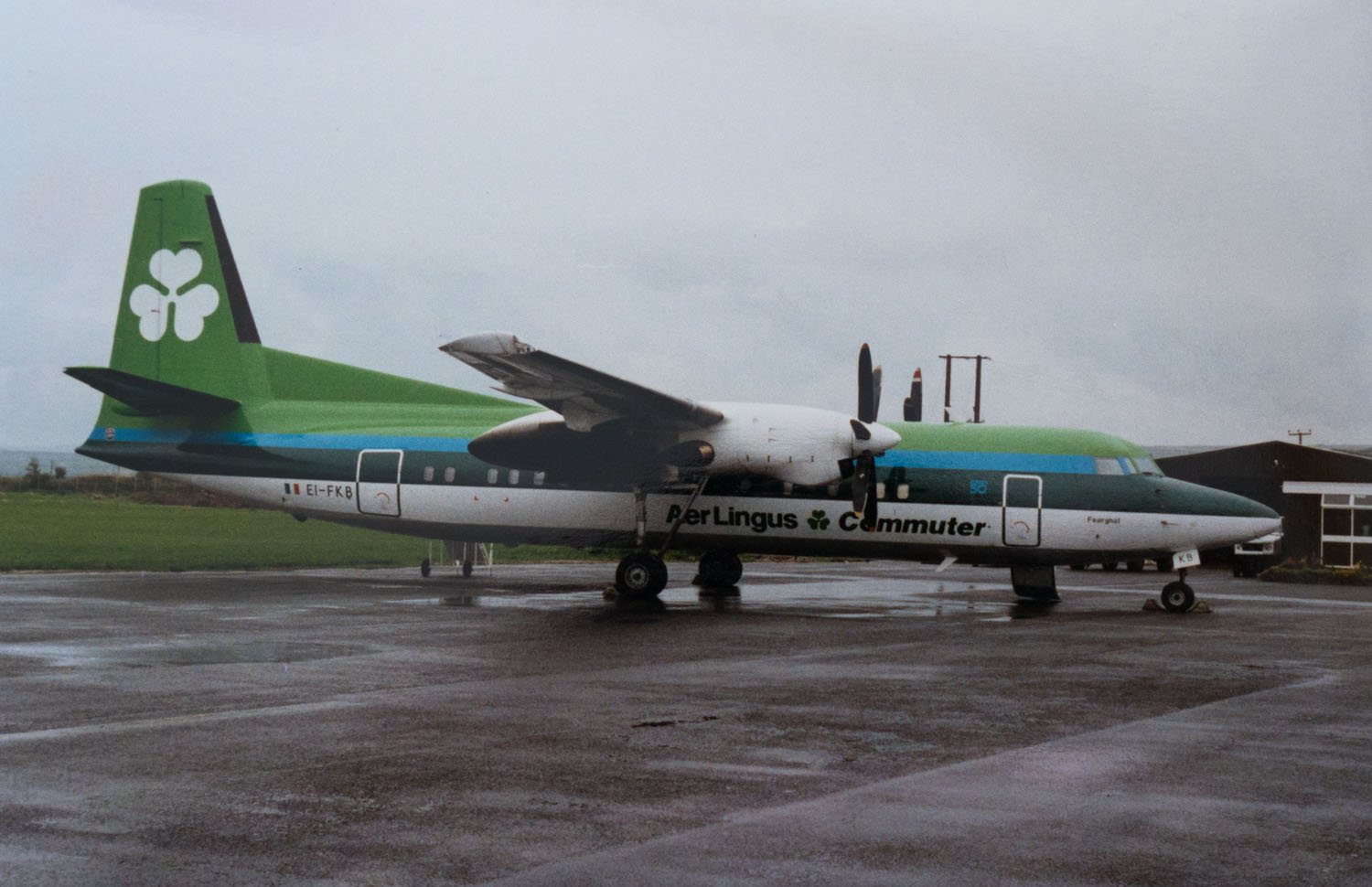
- 1988 to 1992 – In what was felt to be a major breakthrough, Aer Lingus Commuter, the national airline, came to the rescue, launching twice daily services with Shorts 360 aircraft, graduating to Fokker 50 turboprops. In 1991, the airline introduced Saab 340s, cutting the published travel time from 45 to 30 minutes. As part of its marketing campaign, the airline began to promote a Derry/London fare, via Dublin, for just £84 single, which back then would have been perceived as quite competitive. However, in what was a major setback for the City of Derry Airport, the Dublin service became a victim of the national airline’s big cost-cutting exercise in the wake of the global downturn in the aviation industry in 1992.
- 1995 – Jersey European Airways (forerunner of FlyBe) launches flights to Dublin using Shorts 360s, but abandons the route after just nine months.
- 2000 – After a gap of five years, the Dublin route is revived yet again, this time by Aer Arann Express, using Shorts 360s, but like its predecessor, it survives for only nine months.
By this stage in its checkered history, it is becoming painfully obvious that the route is not commercially viable, and no airline would consider taking it on without substantial financial support from the central government.
Essentially, it was a form of state aid known as a Public Service Obligation which made the difference. This mechanism ensured that the airline could operate the flight without sustaining an operational loss. The argument for financial support (PSO funding) was that it was deemed to be vital for the economic well-being of the community which it was to serve.
- 2000 to 2008 – With the assistance of PSO funding, Loganair, operating as a British Airways franchise, launches what turns out to be the most successful Derry/Dublin service in its troubled history. The Scottish-based airline used Saab 340s twice daily, with early morning and late evening departures. The service should have continued had it not been for the great financial crash of 2008, which put an end to much discretionary government spending at that time. PSOs were no longer felt to be as essential as before.
- 2009 to 2011 – A newly constituted Aer Arann, using ATRs, introduced a Derry/Dublin service as it expanded its network to include UK domestic routes. Its operation out of Derry was subject to much criticism, mainly over delays and cancellations. It ultimately gave up on the Derry route in 2011, and with the country still in deep recession, the prospects of any other airline taking on the challenge were becoming very remote.
Now, fifteen years later, the commercial aviation landscape is a little different, with yet another attempt to establish a viable air link between Derry and Dublin.
Statistics on passenger numbers from previous attempts give some context as to the potential market on what is a very low-density route. It is a route that is symbolically important for some people and a necessity for others, but the hard facts are that it has to be supported. If the fare structure is wrong as well as the timings, then it will fail. The PSO has to be justified. No government will wish to preside over a service that is not performing. For all the stakeholders, credibility is key.
The consultation period has recently expired. By year end, it is hoped that the service can be up and running. After an absence of fifteen years, we will soon see if the Derry/Dublin route can survive the inevitable challenges in the modern era and survive for the long term.
To get some sense of the levels of business that historically were achieved in the best years of the Derry/Dublin route, when fares were reasonable, check-in times were short, and flights were early morning and late evening, it is useful to look at Loganair’s statistics for their eight years on the route:
| Year | Passenger Numbers |
|---|---|
| 2001 | 18,678 |
| 2002 | 24,244 |
| 2003 | 29,570 |
| 2004 | 30,925 |
| 2005 | 28,775 |
| 2006 | 29,872 |
| 2007 | 26,134 |
| 2008 | 24,702 |
These are reasonable numbers for a Saab 340 operation, but experts believe there is now potential for more. Time will tell.
All photos by Michael McElroy unless otherwise stated.

