


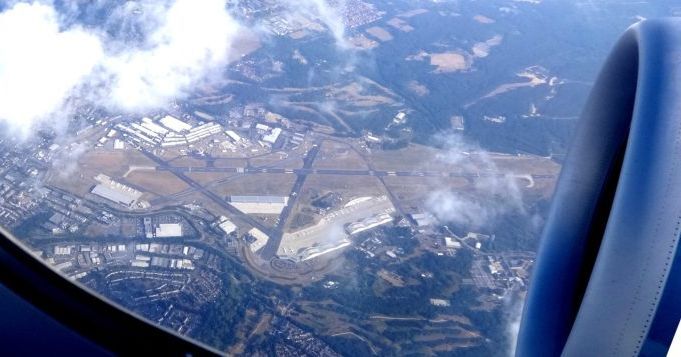
Bums on seats numbers will continue to grow, regardless
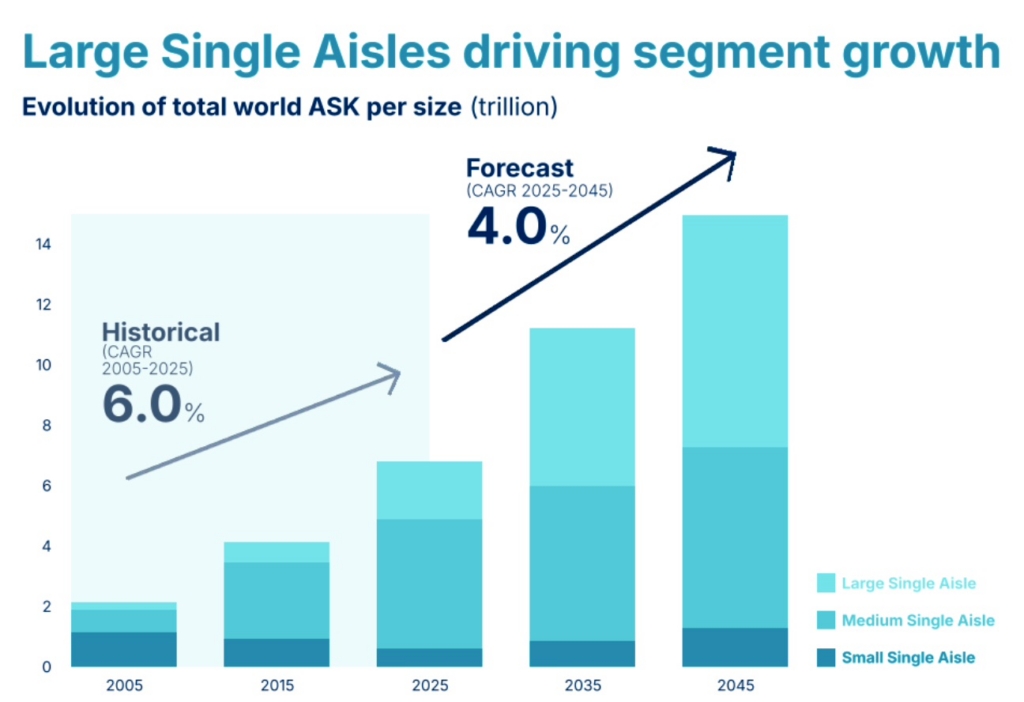
The Big Two forecasts to 2045: Both Airbus and Boeing remain optimistic for the next two decades with similar projections at virtually identical single aisle narrowbodies projections of 33,500 / 33,900 respectively; including widebodies, giving total new expectations of 42,000 / 43,600 respectively (all figures reproduced here, are rounded). Asia being the largest market. Both expect Pax traffic to double by 2045 regardless of relatively short term upsets (three years +/-) based on past 50 years: localised wars; oil crises even pandemics.
Airbus
Airbus project 42,000 new build airliners with approaching half that replacements for older types, split 81%/19% narrow/widebodies respectively. Airbus current order book stands at about 9,000 of which 8,000 are its narrowbodies.

Airbus asserts historic data shows fuel price disruptions or regional wars are not limiting demand for travel. Pointing at a projected world middle class increase of 1.4 billion people via urbanisation into smaller cities and GDP growth expectations. Making new city pairs -longer thinner routes more viable via longer range less fuel burn new models, eg. Dublin-Nashville A321XLR.
By 2045, ten billion pax air traffic are predicted, double of current number, at a projected Revenue Pax Kilometres RPKs of 21.3 Trillion. Asia-Pacific being a main driver and also Latin America. Likewise the global fleet rising to over 45,500 in next 20 years.
The Airbus newcomer A220 formerly Bombardier CSeries, fortunes have changed. Airbus says the A220 pair -100 and -300 hold 56% of its market outselling Embraer E2 26%, 737 Max7 15% and its own 319neo 3%. The 500th model was delivered earlier this year with orders by the end of May at 1,100 with 90% being for the larger -300. Production is ramping towards 13+ A220s per month by 2028, split between Mirabel Montreal and Mobile Alabama 2:1
During the first half of this year Airbus delivered 44 A220s; 271 A320neo all variants; 9 A330neos; 26 A350s and one A330ceo.
On behalf of Qantas and the airline’s long term ambition for a non-stop flight from Australia’s east coast to London-Heathrow, Airbus are flight testing an A350-1000, dubbed ULR ultra long range at 324 tonnes MTOW with a 20,000 litre aft centre fuel tank.
Boeing
Boeing expect 43,600 additional Pax and cargo aircraft split into 33,500 single-aisle, 7,700 widebody, 900 freighters and 1,400 regionals. Total fleet predicted to be 50,000 (4,500 more than Airbus projection). The Global South and East will make up 55% of new deliveries. Their backlog stands at 6,200
Enduring demand include international trade / commerce; growing tourism and new destinations; VFR visiting friends and relatives with extended / dispersed families / friends networks. Boeing said that Pax traffic has grown despite double digit swings in fuel prices in 17 years of the past quarter century.
Pilot and Technician Outlook (PTO): Boeing predicts an industry need for approximately two thirds of a million pilots and nearly three quarters of a million maintenance technicians by 2045 to replace retirements and support fleets growth. Not least a million cabin crew.
Restoring trust: Boeing’s ongoing recovery from well known unprecedented setbacks of the past seven years; the manufacturer has undertaken a root and branch overhaul of both its safety and quality controls. There is now a ”huge jump in communication and accountability” an employee says.
It took the MAX groundings for Boeing to create a post of Chief aerospace safety officer, current postholder is Don Ruhmann. The position unites safety focused teams in various divisions under an enterprise wide, 180,000 people, safety management system (SMS). Ruhmann acknowledges the tension between production schedule pressure and safety based decision making. “They’re always hard decisions, there’s a real schedule up there. We made a commitment to deliver those airplanes” On the change in culture he adds “We’ve seen over the past three years kind of doubling in the amount of employees that are speaking up” and that means protecting the workers who do, confidentially if they want to.
“We share all our results with the FAA”
Certifications: nearing the end of a long road. Boeing has been struggling for years to finalise FAA certifications for three long delayed derivatives; Max7, Max10 and 777-9. All three variants have been plagued by prolonged development issues, supply chain disruptions and intense regulatory scrutiny.
At the time of going to press the FAA granted an amended type certificate to the 737 Max7. It required a redesigned engine anti-ice system to clear and avoid overheat. This was done via ‘turbulators’ installed in the forward fan case for air swirl drawing in colder air and a flow restrictor limiting how much hot air strikes critical components plus an updated integrated air systems controller. Boeing will equip all new build MAXs with this update and retrofit those already in service.
Certification for the Max 10 is expected to be at most by years end with final flight testing by October latest. It has finished over 60% of Development Assurance Level 4 (DAL-4) the final level (the regulatory process to demonstrate adherence). A further enhanced angle of attack AoA system is introduced in the -10 , this will simplify the flight deck effects by identifying AoA faults, inhibiting stick shaker and display a simple “AoA fault” to pilots and a switch to deactivate the stick shaker if necessary. As with the engine anti ice mod above, this enhanced AoA will deliver all models with same and retrofit in-service MAXs.
777-9*: 50% of flight testing now passed milestone and the FAA granted Boeing Type Inspection Authorisation (TIA) Phase 4B for the -9 now complete. “This authorisation unlocked the last remaining portion of our flight test with the FAA that we can now go execute. It enables further avionics and stability & control testing, as well as human factors” said Stephanie Pope, Boeing Commercial Airplanes president and CEO. TIA-5 final phase, will be ETOPS plus function and reliability testing, software of performance and displays, with no deliveries until this final phase is complete.
Four -9s are in the flight test programme covering as well as the above, handling qualities, natural icing tests, APU, environmental control system and lighting. Historically, the FAA approved TIAs in their entirety; in the -9 case in these 5 stages due to previous years quality failures.
*known as the 777X includes a 777-8 version plus a -8F freighter option, both substantial developments of the original 777.
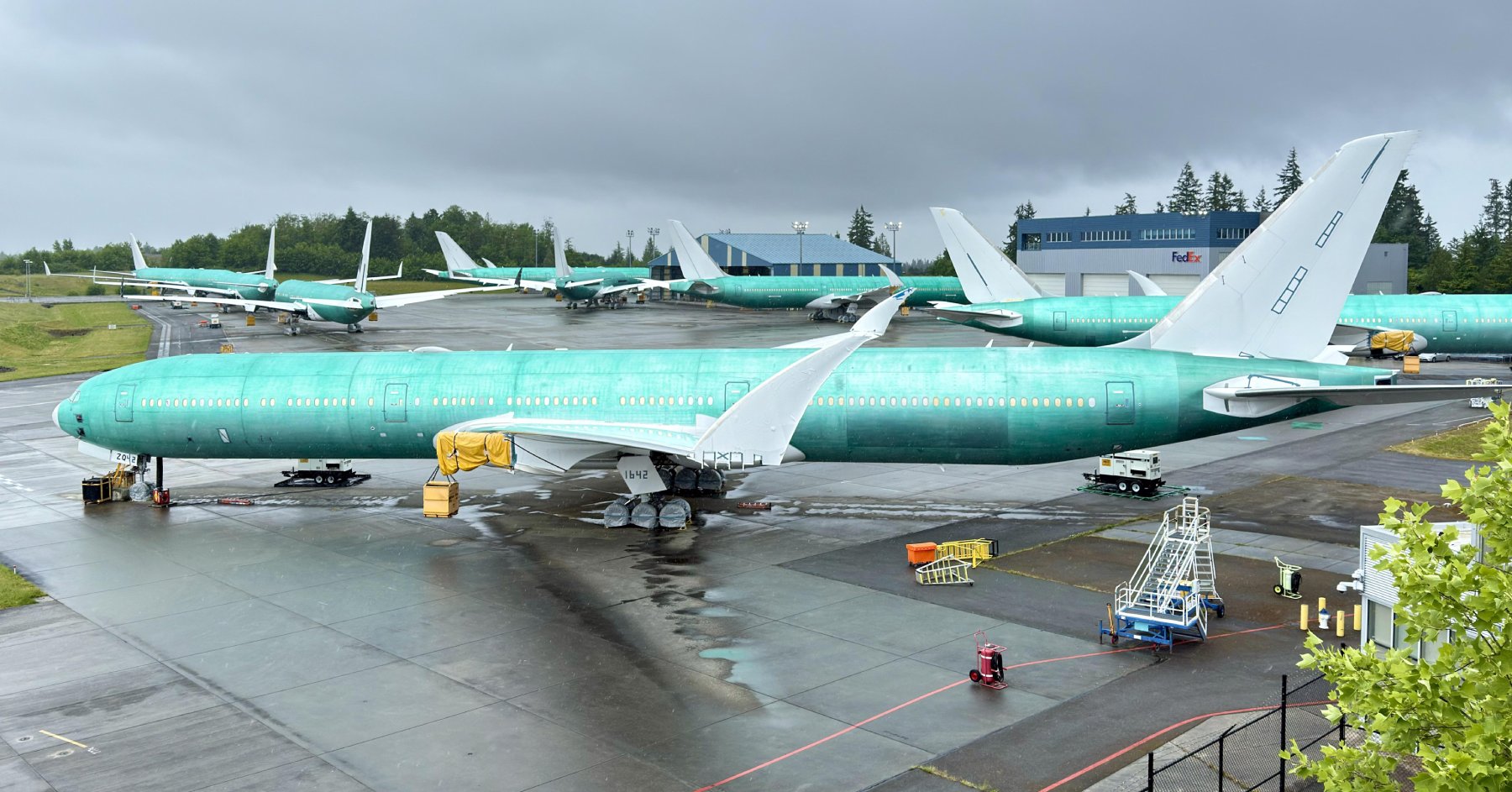
More than 30 777-9s are stored at Everett, some since 2020 and each one must undergo change incorporations to FAA standards, resulting from following years certification updates, production and process improvements since they were built; and each one is different.
Leeham News and Analysis (USA) report:- ‘Change incorporation absolutely requires a single authoritative continuously maintained knowledge of the configuration state of each production airliner. The history of Boeing’s pre production change incorporation is a master class in what happens when an industry’s best practices are forgotten in the name of financial engineering.’
For the 767 and 777 Boeing had its own centralised config management system. The multiple outsourcing for the 787 and later 777X has made this lost in house activity a years long nightmare costing billions. One early build 777X has already been scrapped due to uneconomic rework costs.
FAA have re-cleared Boeing to resume issuing airworthiness certificates for all new 737 and 787 deliveries from 20th July under FAA oversight. “The FAA will continue inspections, audits and monitoring of Boeing’s production system including critical assembly activities, production quality trends and compliance with approved type design and engineering requirements” the agency added.
The FAA pulled this delegated work known as ticketing, following the Max 8 catastrophes in 2018 and 19, then in 2022 for the 787 amid the numerous production quality problems. The regulator added “The decision follows months of thorough data and safety review demonstrating consistent production quality”
Michael O’Leary Ryanair CEO: “Boeing are increasingly confident they will get the MAX-10 certified by September. Our first 15 deliveries are due in 1Q27 so we are quite hopeful that those aircraft will be delivered on time and give us a small amount of growth for next summer. It’s the start of our 300 MAX order and will enable Ryanair growth across Europe from 200 to 300 million annually by 2034.”
Widebody firm orders comparison since 2021 as of early May
| A350 | 618 |
| A330neo | 271 |
| B787 | 965 |
| B777X | 307 |
Addendums to Part 2
Sustainable Aviation Fuel: one airport example
Brisbane Queensland, will upgrade its fuel infrastructure to support a dedicated end to end SAF supply chain. A 3.3 million litre storage tank has been retrofitted to store, blend and distribute SAF, funded by government grant of US$3.4 million.
Rolls Royce Trent modifications
Time on Wing improvements are being backed by a $1.3 billion investment and increasing available Global MRO capacity. The Trent 1000 model’s durability has had the most focus; for the past decade. Its new high pressure turbine (HPT) blades feature 40% more cooling and include updates to the combustion system, fuel spray nozzles and the electronic controller’s software. Once incorporated, these mods will raise the engine to the newer -1000XE standard.
A second enhancement provides a reduced weight HPT blade shroud to reduce centrifugal stresses and new advanced coatings to both the blades and nozzle guide vanes. Retrofits for both during planned shop visits.
Main photo above by Ger Murphy