


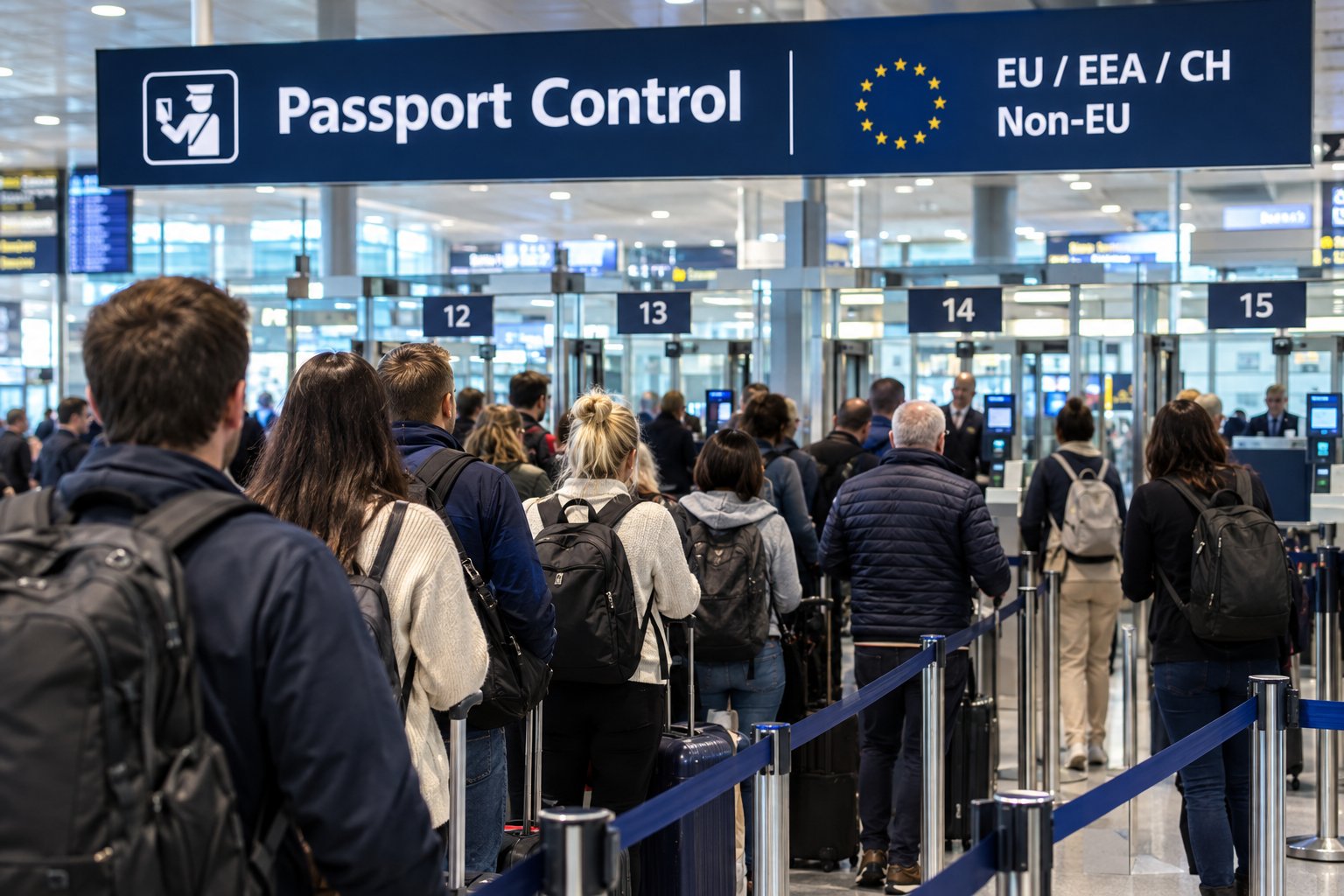
Ryanair has called on the European Commission to extend the derogation on the EU’s new Entry/Exit System (EES) until at least April 2027, warning that its removal on 6th September has already left passengers facing lengthy delays at airports across the continent.
The airline said border processing times had increased sharply since EES came into force, with queues of two to three hours reported at airports including Krakow, Lisbon, Milan and Rome over the summer period. Ryanair pointed to malfunctioning biometric kiosks and staffing shortages at border control points as key contributors to the disruption, alongside the loss of the flexibility the derogation had given member states to manage peak periods.
The EES requires non-EU citizens to register fingerprints and facial images on arrival and departure from the Schengen area, replacing manual passport stamping. The derogation had allowed member states to temporarily suspend elements of the system where congestion risked becoming severe, a safety valve that airlines, airports and industry bodies had said was needed given repeated warnings that the rollout was not ready.
Ryanair’s Chief Operating Officer, Neal McMahon, said the EU’s handling of the system had been “a shambles from start to finish” and that “passengers should not be made pay the price for the EU’s failed EES rollout.”
The airline is one of the largest operators in and out of Ireland, and Irish passengers travelling to Schengen destinations this autumn and winter are among those exposed to the longer processing times at connecting and destination airports while the system beds in. Ryanair is urging the Commission to restore the flexibility until April 2027 to give airports time to fix the technical and staffing issues before the derogation is withdrawn for good.

