


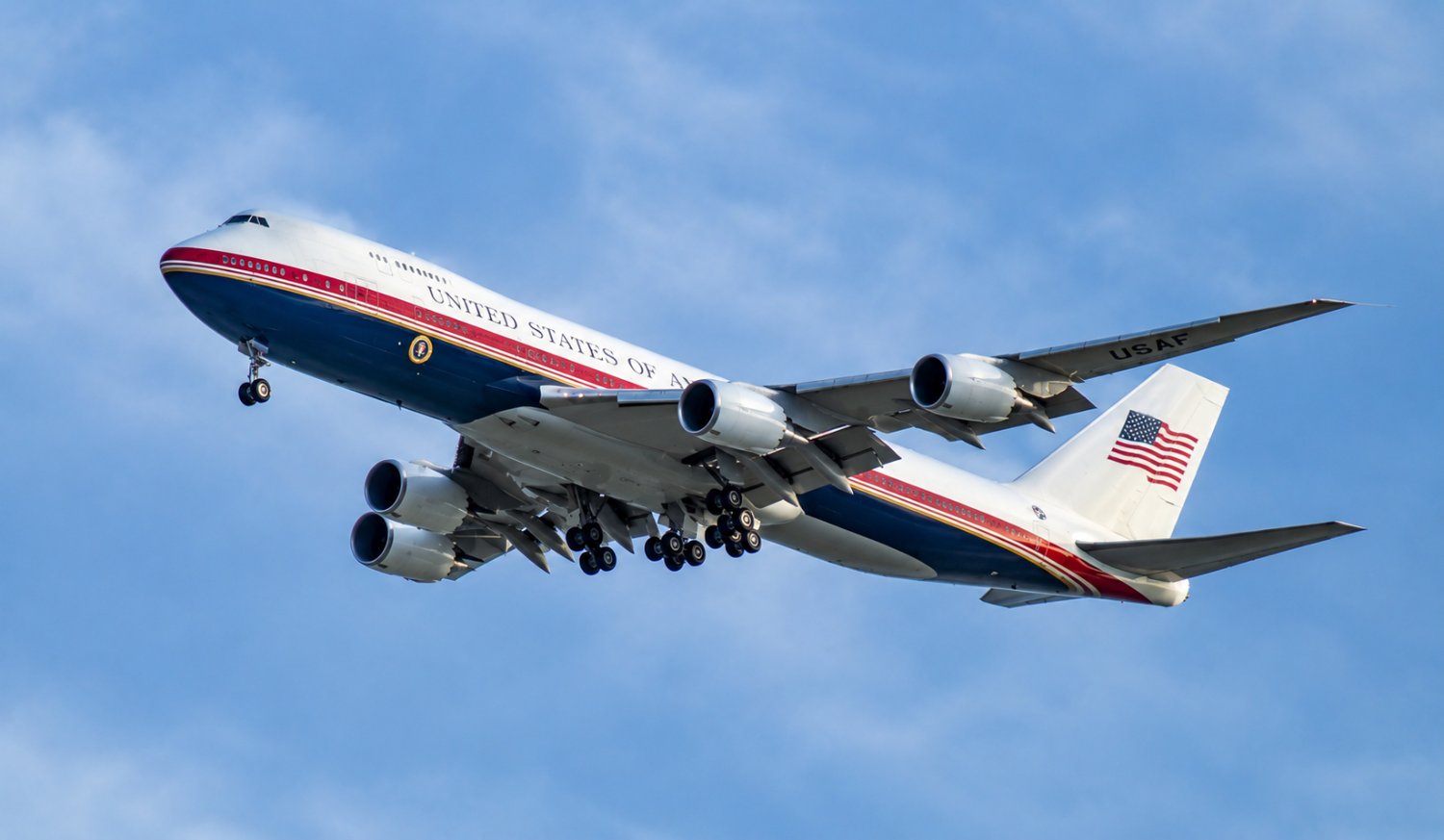
The arrival of Air Force One in Ireland this weekend offered aviation enthusiasts a rare opportunity to see two generations of the United States presidential airlift fleet operating together. President Trump arrived aboard the new VC-25B serial 25-3300, based on the Boeing 747-8 Intercontinental, while veteran VC-25A 92-9000 accompanied the visit carrying members of the presidential entourage, support staff and equipment.
For aviation followers, the visit represents a fascinating snapshot of the evolution of one of the world’s most famous aircraft fleets. Together, the two aircraft showcase more than three decades of development in long-range VIP and special mission aviation.
Air Force One Callsign
Despite popular belief, “Air Force One” is not the name of a specific aircraft. It is the radio callsign used by any United States Air Force aircraft carrying the President of the United States.
For more than three decades, that role has been fulfilled by two specially modified Boeing VC-25A aircraft based on the Boeing 747-200B. Today, however, the presidential fleet is undergoing a transition. During the Irish visit, the President travelled aboard the new VC-25B serial 25-3300, while VC-25A 92-9000 continued to support the mission, allowing aircraft enthusiasts a rare chance to see both generations operating together.
A Boeing 747-8 at Heart
The aircraft carrying the US President on this visit is based on the Boeing 747-8 Intercontinental, the final passenger variant of the legendary Jumbo Jet. At 76.3 metres (250ft 2in) long, the 747-8 is the longest passenger aircraft Boeing has ever built and is significantly larger than the 747-200-derived VC-25A fleet it supplements. Power is provided by four General Electric GEnx-2B turbofan engines, bringing improvements in fuel efficiency, reliability, noise reduction and range over previous generations of the aircraft.
The 747-8 also introduced a redesigned wing incorporating technology developed for the Boeing 787 programme. Its distinctive raked wingtips and aerodynamic refinements improve performance and efficiency on long-haul flights.
Flying Command Centre
Although much about the aircraft remains classified, the VC-25B is far more than a means of transport. The aircraft functions as an airborne command and control centre, allowing the President and senior officials to remain connected anywhere in the world. Secure communications systems enable continuous contact with military commands, government agencies and diplomatic missions, ensuring uninterrupted access to information and decision-making capabilities.
Externally, several additional antenna installations distinguish the aircraft from a standard 747-8. These support a sophisticated array of secure voice, data and satellite communication systems that allow the aircraft to function as a mobile headquarters while in flight.
Defensive Systems
Like its predecessor, the VC-25B incorporates advanced defensive systems designed to protect the aircraft during overseas operations. While precise details remain classified, publicly available information confirms the installation of specialised self-defence equipment and mission systems. Aviation analysts believe these include electronic countermeasures, missile warning sensors and other technologies intended to enhance survivability in higher-threat environments. The aircraft is also designed with extensive system redundancy, allowing key functions to continue operating even in the event of equipment failures.
Interior Facilities
One of the most interesting aspects of serial 25-3300 is its origin. Unlike the original VC-25A fleet, which was purpose-built for presidential service, this aircraft began life as a Boeing Business Jet configured for VIP operations. Much of its luxury interior was retained during conversion, accelerating its entry into service.
The aircraft includes:
- Private accommodation suites
- Executive office space
- Conference and meeting rooms
- Communications workspaces
- Passenger lounges
- Large galley facilities
- Areas for supporting staff and officials
In effect, the aircraft combines the functions of a corporate headquarters, conference centre and long-range transport aircraft within a single airframe.
Built for Global Operations
Presidential aircraft must be capable of operating virtually anywhere in the world. As a result, the VC-25B is designed with a high degree of self-sufficiency. The aircraft can operate from airports with limited support infrastructure while carrying the equipment required for extended international missions. The aircraft is also expected to incorporate many of the capabilities traditionally associated with presidential air transport, including dedicated medical facilities, specialised communications equipment and autonomous ground-operation systems.
While much of the attention understandably focused on the arrival of the new VC-25B, aviation enthusiasts may have been just as interested in the presence of 92-9000. Delivered in 1990, the aircraft is one of the two original VC-25A aircraft that have served as Air Force One for more than 35 years. Based on the Boeing 747-200B, it introduced a step change in presidential air travel, combining long-range performance with secure communications, aerial refuelling capability and extensive onboard facilities.
The aircraft has carried multiple US Presidents and participated in countless international missions during its service life. Even as the fleet transitions to newer aircraft, the VC-25A remains an integral part of presidential airlift operations. For aviation enthusiasts, seeing 92-9000 and 25-3300 side-by-side offers a striking visual comparison. The newer 747-8 is noticeably longer and features the distinctive raked wingtips absent from earlier variants, while the older VC-25A represents one of the final operational examples of the classic 747-200 in government service.
The Aircraft That Have Served as Air Force One
While the Boeing VC-25A and VC-25B are the most recognisable presidential aircraft, a wide variety of types have carried US Presidents over the decades. The callsign “Air Force One” dates from the 1950s and applies to any US Air Force aircraft carrying the President.
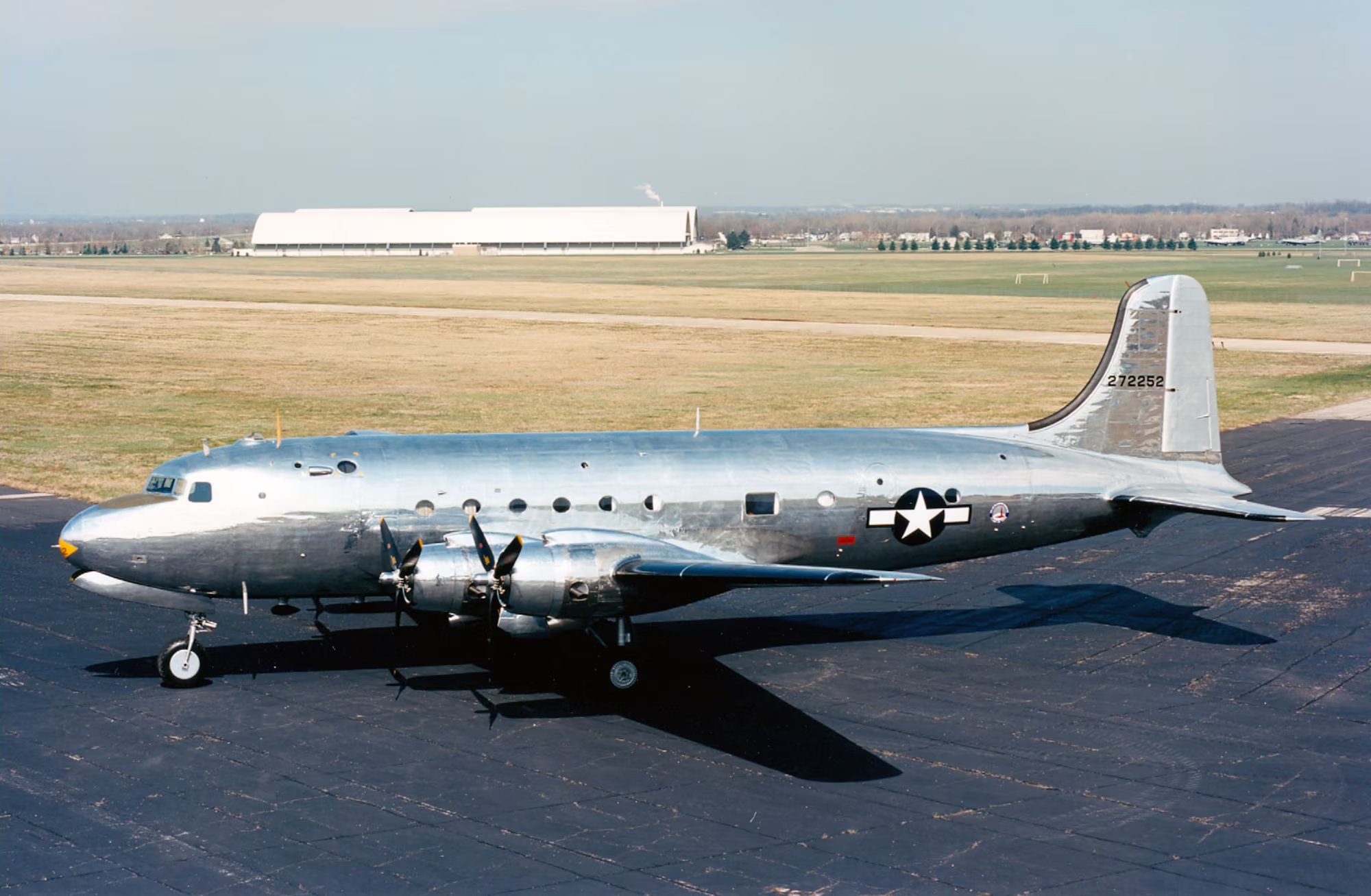
Douglas VC-54C “Sacred Cow” (1945-1947)
The first aircraft specifically modified for presidential use carried President Franklin D. Roosevelt. Based on the military version of the DC-4 airliner, it featured a bedroom, meeting space and even an elevator to assist the wheelchair-bound President.
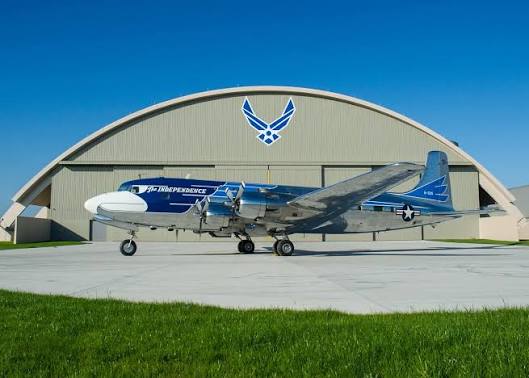
Douglas VC-118 “Independence” (1947-1953)
President Harry Truman’s aircraft was a modified DC-6 named after his hometown of Independence, Missouri. It introduced a higher level of comfort and range for international travel.
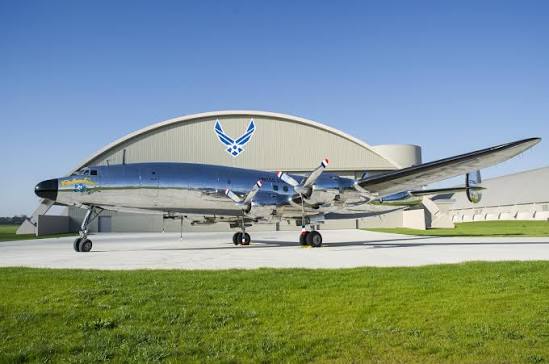
Lockheed VC-121 Constellation (1953-1961)
Presidents Eisenhower and Kennedy used several versions of the elegant four-engined Constellation, including “Columbine II” and “Columbine III”. It was during the Eisenhower years that the callsign “Air Force One” was first introduced to avoid confusion with commercial flights.
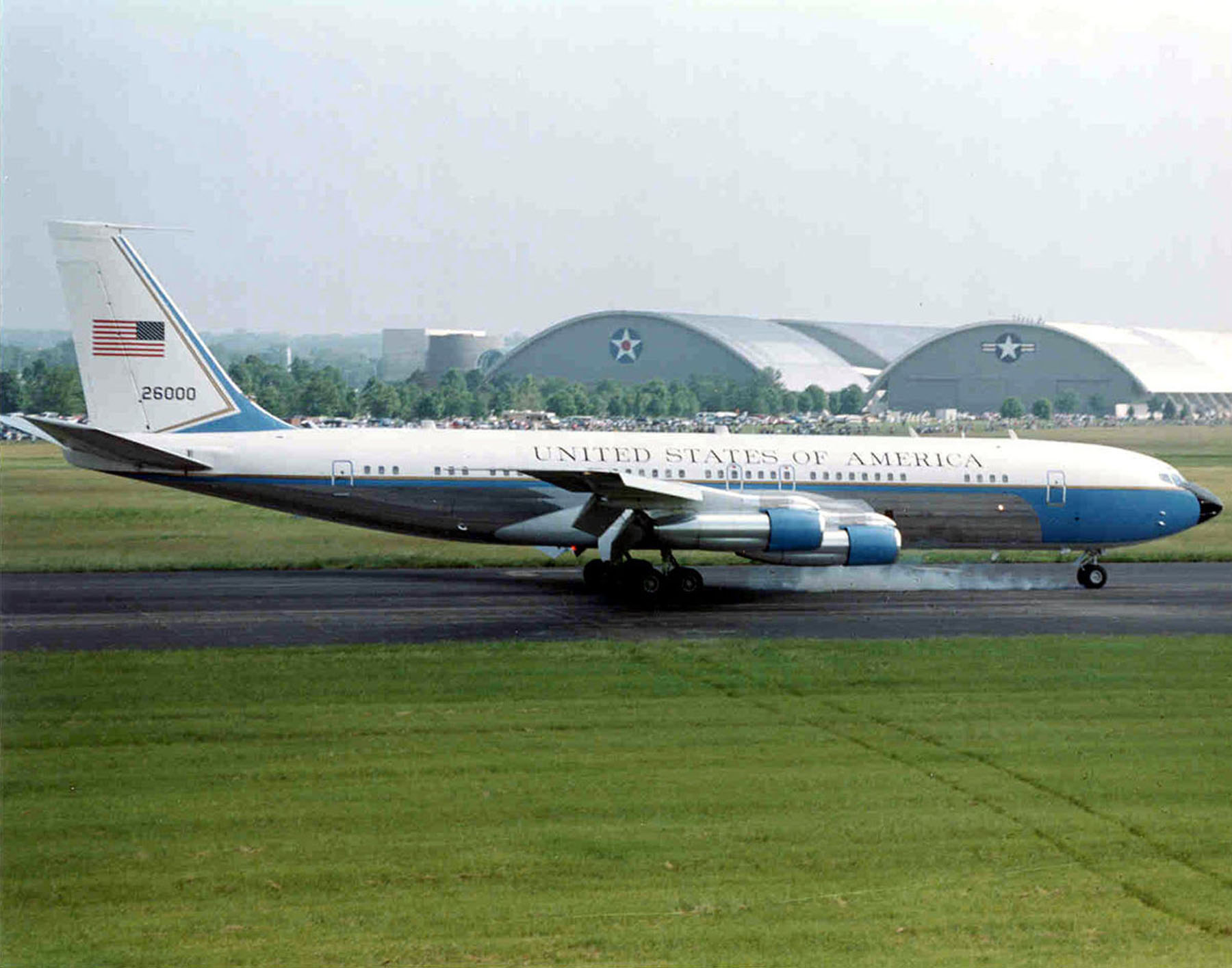
Boeing VC-137C (1962-1990)
Derived from the Boeing 707, the VC-137 became one of the most famous presidential aircraft in history. The blue-and-white livery designed during the Kennedy administration became an enduring symbol of Air Force One. The aircraft carried every President from John F. Kennedy through George H.W. Bush and was present at numerous historic events, including President Kennedy’s final trip to Dallas.
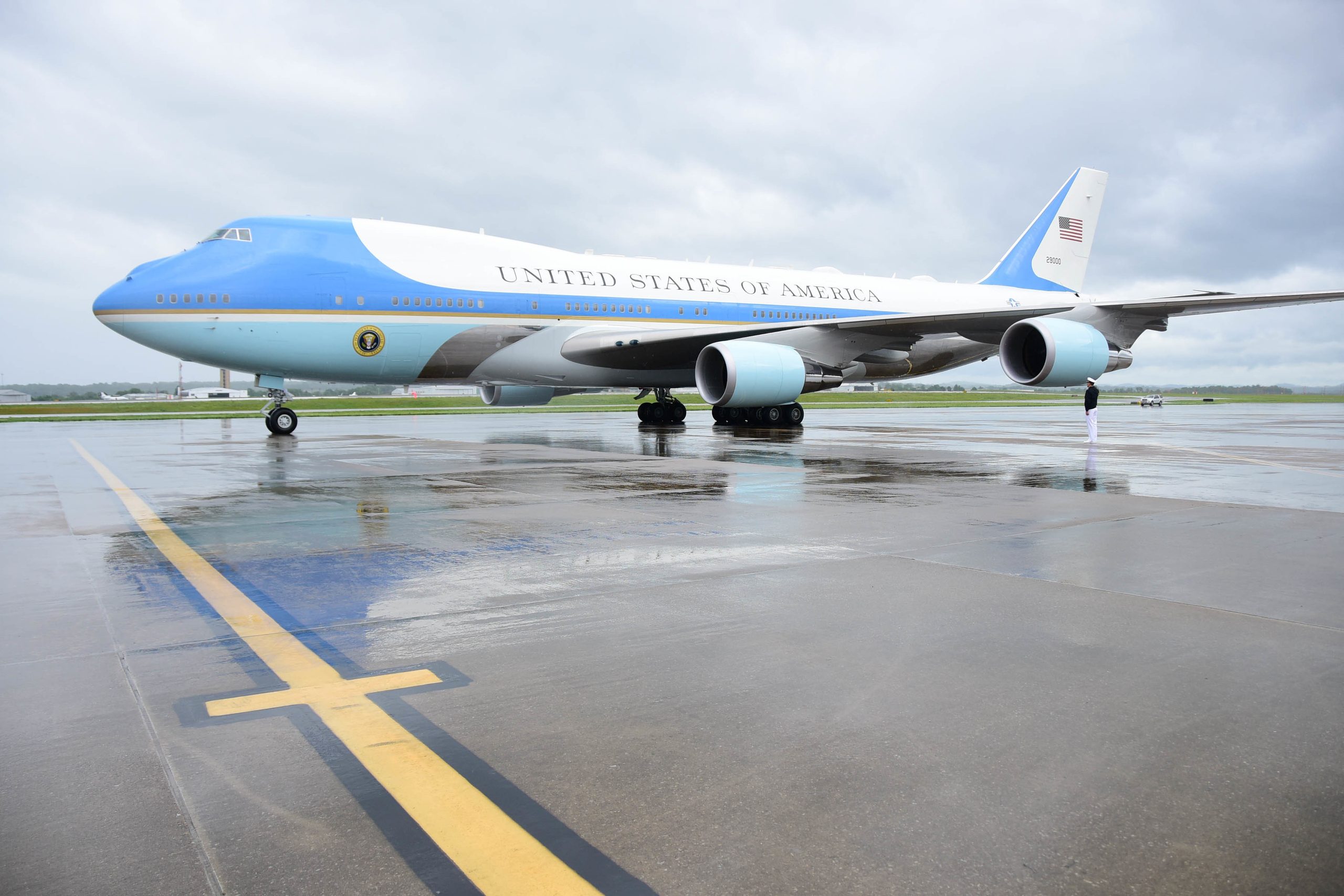
Boeing VC-25A (1990-2026)
The arrival of the Jumbo Jet transformed presidential air travel. Two specially modified Boeing 747-200Bs, serials 28000 and 29000, provided vastly increased range, communications capability and onboard facilities, earning the nickname “The Flying White House.”
Boeing VC-25B (2026-Present)
The latest aircraft to carry the President is the Boeing 747-8-based VC-25B. The aircraft seen in Ireland, serial 25-3300, represents the first use of Boeing’s final Jumbo Jet variant in presidential service, combining modern engines, improved efficiency, advanced communications and enhanced mission systems
Did You Know?
Although large Boeing aircraft dominate popular images of Air Force One, many other aircraft have carried US Presidents, including the C-54, DC-6, Lockheed Constellation, Boeing 707, C-32A (Boeing 757), and even smaller military transports when circumstances required. Whenever the President is aboard, the aircraft instantly assumes the callsign “Air Force One.”

