


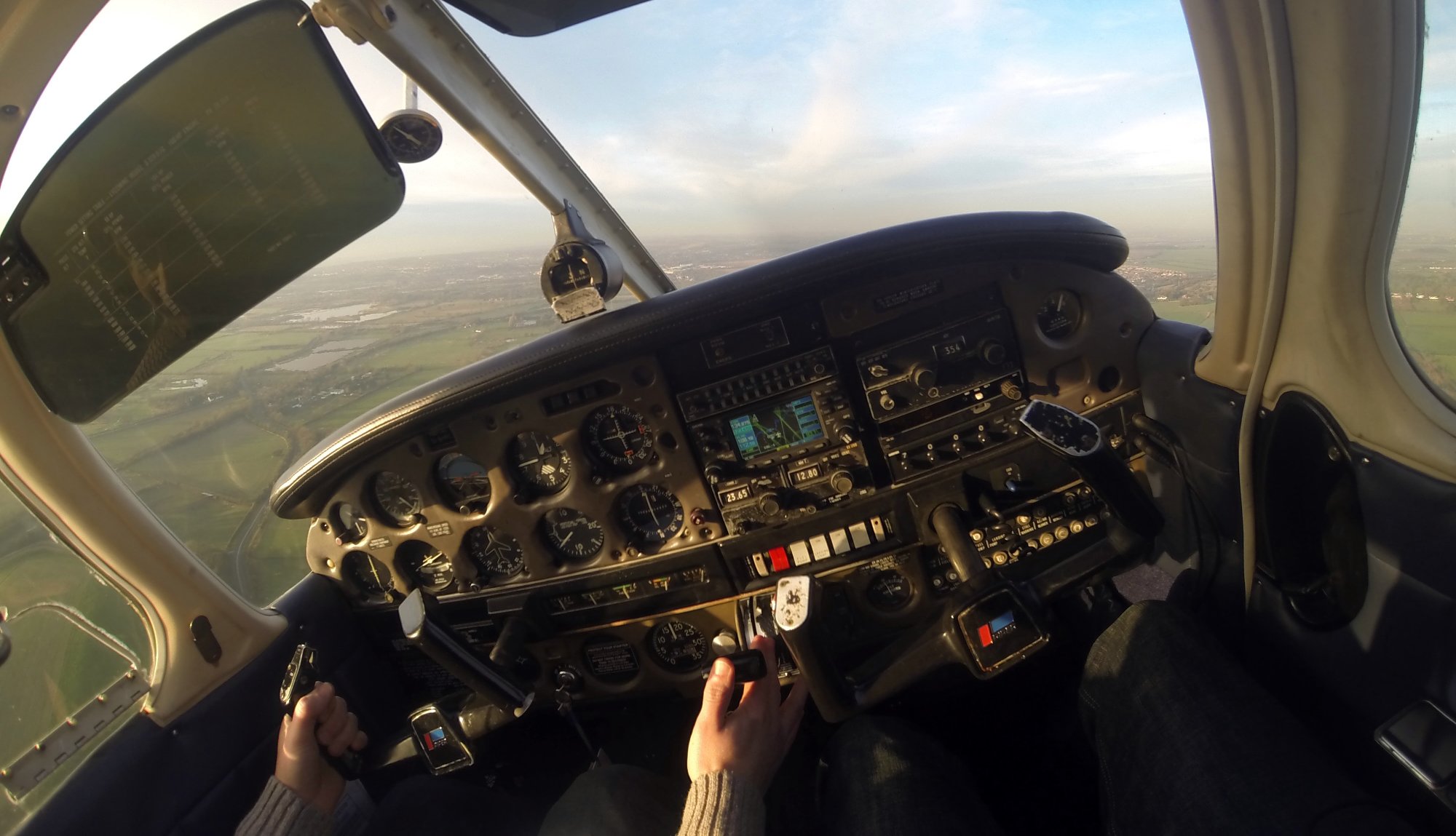
The UK Civil Aviation Authority (CAA) has recently published CAP3270: Stay in Control – Partial Power Loss, a timely safety guide addressing a threat that many pilots may not fully appreciate. The publication comes at a particularly relevant time, as EASA has introduced partial power loss awareness and training into refresher training requirements for SEP class rating revalidations, recognising that these events occur more frequently than complete engine failures and often present pilots with a more complex decision-making challenge. While flight training has traditionally focused on complete engine failures, the CAA highlights that partial power loss events can be significantly more difficult to manage. The new guidance aims to improve pilot awareness, decision-making and survival outcomes when faced with an engine that continues to produce some power, but not enough to guarantee safe flight.
The Hidden Danger
A complete engine failure presents a straightforward problem: the engine stops producing power, and the pilot immediately transitions to established forced landing procedures. A partial power loss is far more deceptive. The engine continues running, often producing inconsistent or inadequate power, leaving the pilot unsure whether performance will improve, remain stable, or deteriorate further.
This uncertainty can tempt pilots to continue a flight, attempt troubleshooting, or delay critical decisions. Accident investigations have repeatedly shown that these delays can lead to loss of control, particularly at low altitude where there is little time or height available to recover.
Prevention Starts Before Take-off
One of the key messages from CAP3270 is that many partial power loss events are preventable. Investigations frequently identify warning signs that were present before departure, including:
- Excessive RPM drop during magneto checks.
- Failure of carburettor heat checks to produce the expected RPM response.
- Static RPM below published values.
- Engine roughness, unusual sounds, vibration or other abnormal behaviour.
The CAA stresses the importance of thorough pre-flight inspections, disciplined engine run-up checks and a solid understanding of the aircraft’s Pilot Operating Handbook. Any indication that the engine is not performing normally should be taken seriously before committing to flight.
The Importance of the Pre-Take-off Brief
Pilots regularly brief for a complete engine failure after take-off, but many do not actively consider a partial loss of power. The CAA recommends including partial power loss scenarios in every take-off brief. Thinking in advance about how to react during the take-off roll, initial climb and circuit phase can significantly reduce indecision when seconds count.
The guidance also encourages the use of the full available runway where practical and suggests establishing a clear reject point. One useful rule of thumb is to expect approximately two-thirds of take-off speed by the first third of the runway. Failure to achieve expected acceleration should be treated as a warning sign requiring immediate action.
After Take-off: Fly the Aircraft First
A partial power loss immediately after take-off creates one of the most hazardous situations a pilot can face. Whether the symptoms are rough running, engine surging, abnormal noise, or reduced RPM, the priority remains unchanged: maintain control of the aircraft. The CAA advises pilots to lower the nose as necessary to maintain flying speed and avoid becoming distracted by troubleshooting.
If sufficient runway or airfield boundary remains available, landing straight ahead is often the safest option. Where this is not possible, pilots should treat the situation much like a complete engine failure and select a suitable landing area ahead rather than attempting to continue the climb. Importantly, the guidance warns against relying on the remaining engine power. The fact that some power is available does not guarantee that it will remain available.
The Turnback Trap
Perhaps the strongest warning in the publication concerns turnback attempts following a partial power loss. The temptation to return to the runway can be particularly strong when the engine is still producing some thrust. However, unless substantial height has already been gained and the remaining power is sufficient to maintain altitude confidently, turnbacks are considered extremely hazardous.
History has shown that many fatal accidents result not from the power loss itself, but from subsequent stalls and spins during low-level manoeuvring. The guidance emphasises maintaining safe airspeed, limiting bank angle and accepting an off-airfield landing if necessary.
Managing Partial Power Loss in Cruise
At cruising altitude, the pilot generally has more time and options available, but the same principles apply.
Warning signs may include:
- Rough running or vibration.
- Fluctuating or decreasing RPM.
- Changes in manifold pressure.
- Unusual fuel pressure or fuel flow indications.
- Rising engine temperatures.
- Falling oil pressure.
- Changes in engine sound.
The CAA recommends establishing best glide speed initially and assessing whether sufficient power exists to maintain altitude and divert safely. Even when diverting to an airfield, pilots should remain within gliding distance of suitable landing areas whenever possible, recognising that the partial power loss could become a complete failure at any time. And, as always, the familiar priority applies: Aviate. Navigate. Communicate.
Key Takeaway for GA Pilots
CAP3270 delivers a simple but important message: partial power loss should not be viewed as a lesser emergency. In many ways it presents a greater threat than a complete engine failure because it introduces uncertainty at exactly the moment when clear and decisive action is required. Pilots who recognise the warning signs early, conduct rigorous pre-flight checks, brief for the possibility before every departure, and treat low-level partial power losses as full power failures are far more likely to achieve a safe outcome. The full guidance document can be viewed on the UK CAA website by clicking here.

