


Irishwoman, Lilian Bland, is often credited as being the world’s first female aviation engineer. In 1910, before the days of pilot or maintenance licences, Bland designed, built, and flew her own aircraft. She named it ‘Mayfly’ (may fly, may not fly). Over 100 years later, women in aircraft maintenance and engineering are in an even smaller minority than female professional pilots!
In 2015, the FAA reported that women made up just 2.4% of certificated Airframe & Powerplant mechanics. In Ireland, women count for less than 1.2% of the licenced aircraft engineers. While female licenced engineers have been around since the first year the US Department of Commerce’s Aeronautics Branch issued licences (1927), their numbers haven’t grown in proportion with industry.
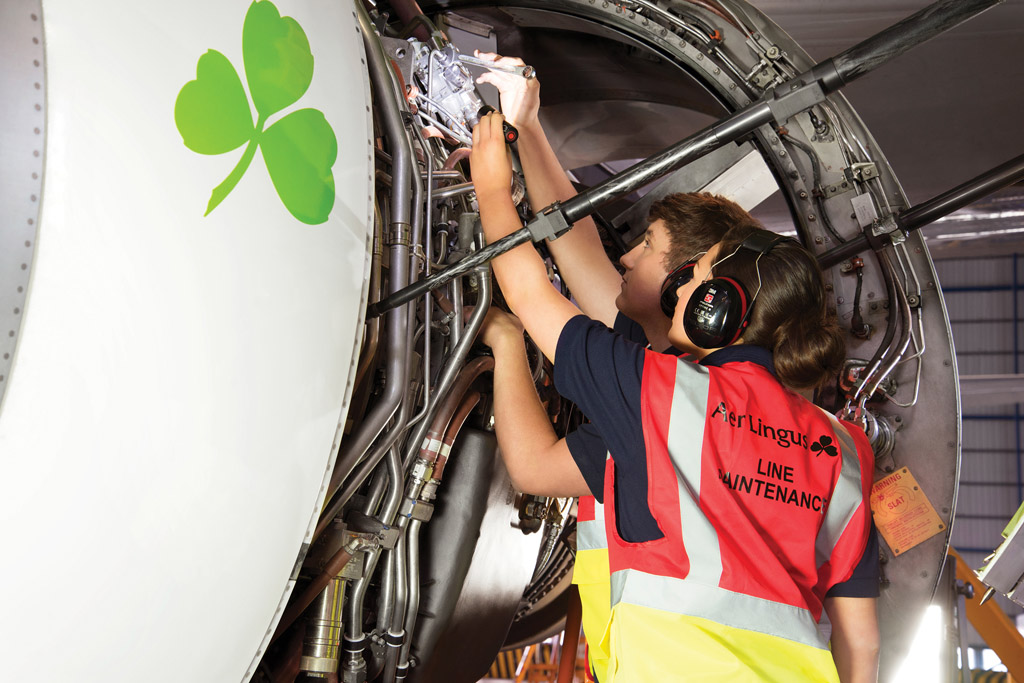
In the latest apprenticeship class, Aer Lingus hired 3 women in a class of 10. This high level of female participation may be as a result of the online advertisement for the programme specifically recognising the need for diversity. Diversity on the hangar floor generates diverse thinking, which improves innovation and has been shown to result in better financial returns. Dublin Aerospace’s announcement of 150 new jobs over the next three years specifically mentioned women in regards to their Apprenticeship and Trainee programmes. Hopefully this will encourage more women to participate in the sector.
Notwithstanding the need to encourage diversity, it is projected that there will be a shortage of licensed aircraft engineers globally within the next 10 years. This may increase the cost of maintenance for airlines and cause flight delays or cancellations. The aviation industry will be eager to draw applicants from all school leavers, not just the male ones.
How can airlines and maintenance organisations encourage the participation of women in maintenance and engineering? Some suggestions include;
- Setting targets for increasing the number of women employed in maintenance and engineering;
- Reaching out to schools to raise awareness of opportunities in aircraft engineering;
- Providing specific diversity training to all staff with recruitment responsibilities; and
- Explicitly referring to or depicting women in advertisements and marketing material regarding any traineeship/apprenticeship programme.
Becoming a licenced aircraft engineer requires the same investment of time and effort as an upper level academic qualification. An apprenticeship takes 4 years of ‘on’ and ‘off’ the job training, practical assessments, and exams in which a 75% mark is required to pass. Once qualified, an aircraft engineer performs a safety critical role in ensuring that all tasks they perform are done to the highest standard in order to keep aviators and the public safe.
Former aircraft apprentices can be found in all areas of aviation, some are Chief Executive Officers, Chief Operations Officers, or Chief Technical Officers, in airlines, maintenance organisations, drone manufacturers, and aircraft leasing companies. Others found their calling in Motorsport, namely Formula 1! Credited with being the first woman to fly in Ireland, and having the first powered biplane in Ireland; Lilian Bland left aviation for the motor trade where she opened and operated the first Ford Dealership in Belfast!


