


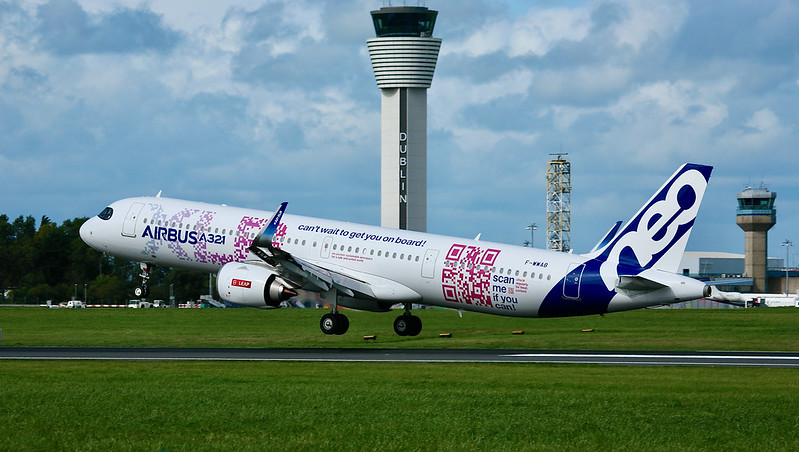
Airbus has brought its latest aircraft, the Airbus A321XLR to Dublin as part of the ‘Functional and Reliability Testing’. Also referred to as ‘Route Proving’, this is part of Airbus’ certification activity contributing to EASA Type Certification expected for the new variant in 2024. The main objective of the Rote Proving is to demonstrate the A321XLR’s systems maturity well before entry into service, with a target of approximately 100 hours of flying time over 10 days with no systems power-down. Specific sectors, comprising around 15 flights in total, are intentionally typical of what airlines might fly when the aircraft enters service. These have been defined to represent a mix of operator profiles, climatic conditions, flight durations, and airport turnaround times.
For the first time since the A321XLR first flew in June 2022, there will be real airline cabin and flight crews gaining hands-on experience, alongside the Airbus test pilots and flight engineers as well as a representative group of around 30 passengers made up of volunteer Airbus and airline employees. Everyone on board, as well as myriad supporting teams on the ground in Toulouse and also at the destination airports, will contribute to a common objective to provide valuable feedback as the A321XLR spreads its wings for the first time, crossing oceans and visiting international airports. The aircraft which is flying these missions is ‘MSN 11080’ – one of three dedicated flight test prototypes, and the only one which is equipped with a full cabin interior.

Commenting on the programme, Airbus’ Lead Flight Test Engineer for the A321XLR’s ‘Functional and Reliability Testing’, Jim Fawcett said, “In the olden days ‘route proving’ was very much about showing customers the aircraft in action – that the aircraft they have bought can actually do what they want to do with it. These days we carry on with this kind of demonstration, but we’re also looking at showing the technical reliability and maturity and good functioning of the aircraft. So that’s why we prefer to call it ‘functional and reliability testing’.”
“One is a certification requirement and it’s actually written down in the EASA rules and regulations. While there are similar things on the FAA side, we’re getting an EASA type certificate to start off with, and this requires us to conduct 150 hours of flying which has to represent routine airline-like operations and do so safely under all normal dispatch conditions. Moreover, EASA recommends that this testing is undertaken working with an operator, in our case an airline. The flying has to be done on a single aircraft, flying on a continuous schedule, and its configuration needs to be as close as possible to the final ‘Type’ design. This is why we perform this exercise in the second half of the overall certification campaign, as it allows us to have completed all the independent intermediate development cycles and thus have the latest software standards loaded. We’re therefore looking to go somewhere a bit warm, and a bit cold – to different airfields in terms of their infrastructure, location, weather, and runway altitudes. So if we can tick all of those boxes as well, then it makes it a much more representative demonstration.”
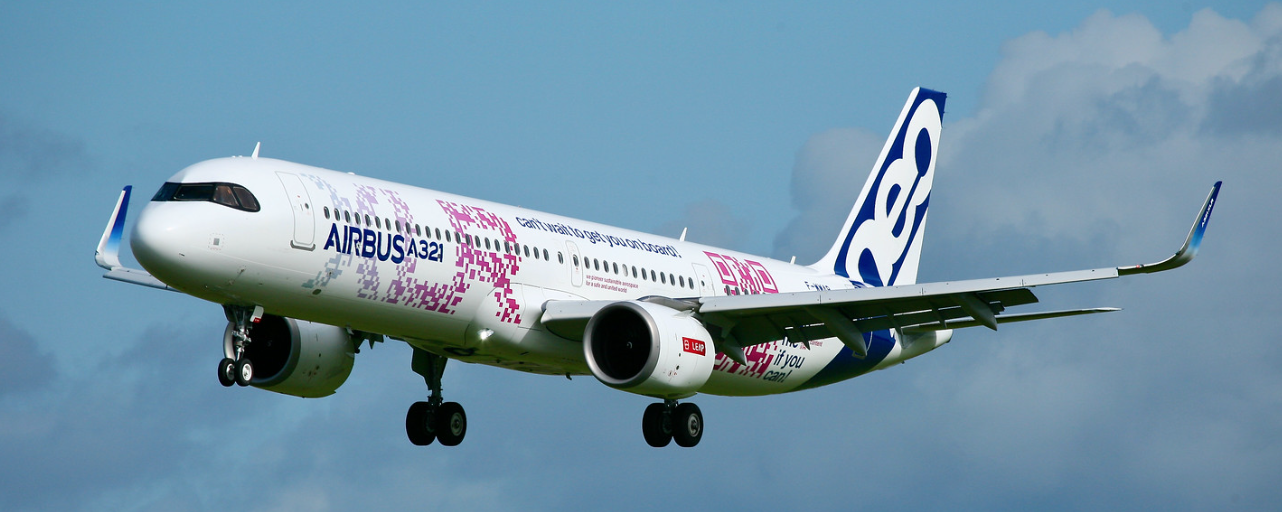
The aircraft involved, F-WWAB, arrived in Dublin on Monday from the Airbus factory in Toulouse at 13.55. Airbus then hosted a number of executives from media, airline companies, and leasing companies during the afternoon. The aircraft overnighted at Dublin before departing to Miami shortly after 11.00 on Tuesday morning. The aircraft has a QR code on the side and the details of each flight can be found here. The aircraft is scheduled to visit Dublin again as part of the scheduling test in the coming week.

