


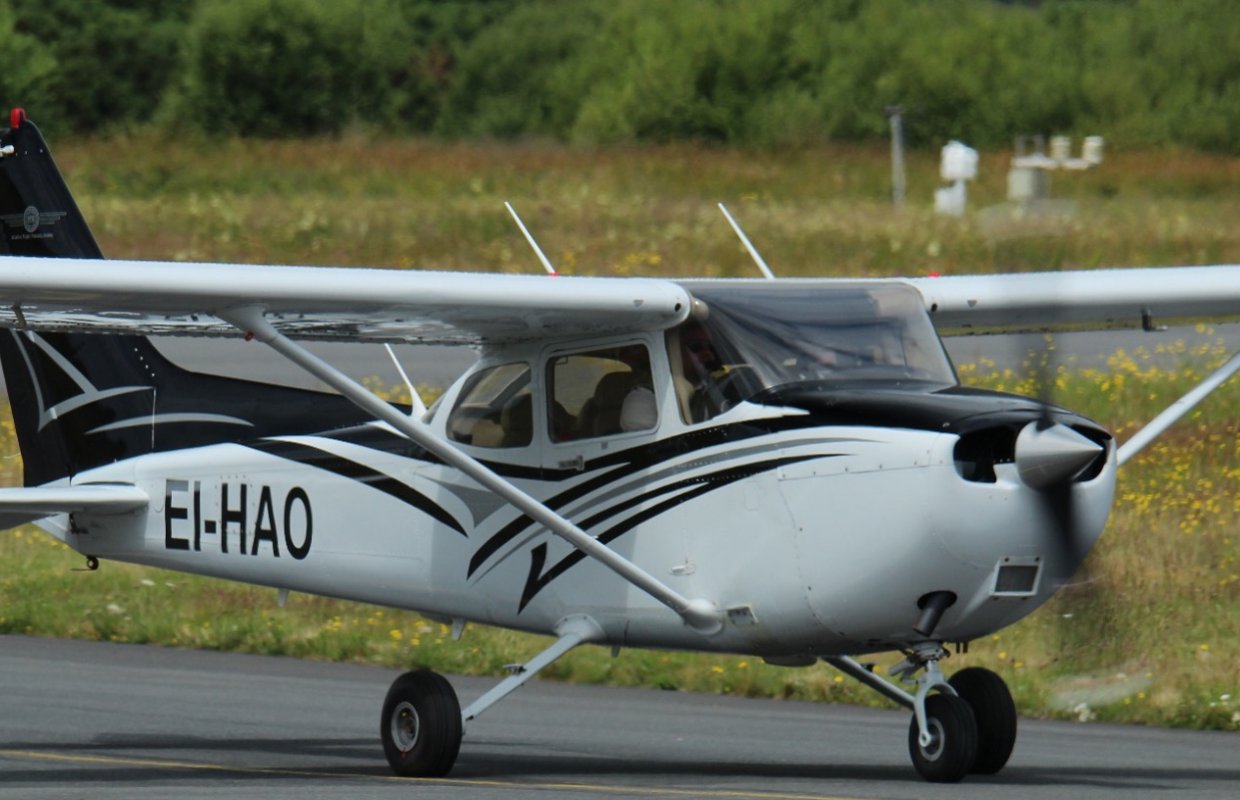
Being a commercial pilot is one of the most rewarding careers in the world, but it can also be unpredictable. From mass furloughs to unexpected medical issues, many factors can suddenly affect any pilot’s future. For me, career stability is essential and that’s exactly what the Global Business and Pilot Studies course offers. In this article, I’ll share why I chose this course, what the assessment process was like, and my experience so far.
My name is Luke O’Callaghan, and I am a first-year student in Global Business and Pilot Studies in Munster Technological University (MTU) in conjunction with Atlantic Flight Training Academy (AFTA). This unique course enables students to obtain an NFQ Level 8 Bachelors of Science Degree in Global Business alongside completing flight training, all within the same standard 4-year period as a “regular” college course. The added security and peace of mind the business degree provides is the main reason that I chose this course.
Becoming a pilot has been my dream career for as long as I can remember. While on a family holiday, I was greeted by a British Airways Boeing 767 Captain upon boarding at 7 years old and since then I have been hooked on anything with wings. Multiple more cockpit visits and a few hours in light aircraft later, here I am pursuing my dream of becoming a pilot. Coming into last year, my leaving cert year, I began going about turning my dream of becoming a pilot into a reality. Thanks to attending AFTA’s Open Day during the previous year I was solely focussed on securing my place in Global Business and Pilot Studies (GBPS) from the outset.
There is a substantial nonstandard application process you must go through to get into GBPS. Firstly, and most importantly, you must pass an EASA Class 1 Medical. I was extremely nervous on the day of my medical, however all staff were very helpful, friendly and understanding which helped keep my nerves at ease throughout the process. I got bloods taken, completed a lung function test, an in-depth eye examination, an ECG, and a hearing test. Some other basic health screening was completed, such as blood pressure and BMI readings. Moving to the AFTA assessments, I had to complete a CUT-E test, an online psychometric examination. There is some prior study required for this element of the assessments, AFTA require two weeks prep, however it is very manageable. The test itself consists of work-related behaviour, situational behaviour, inductive logical thinking, reaction speed, spatial orientation, multi-tasking capability and complex control. Once this step had been completed, it was time to move onto the Simulator Assessment and Interview. The simulator assessment measured my ability to interact with an instructor and my ability to control the aircraft. Previous flying experience is not a requirement, but I found it very helpful going into the sim. Once this step was completed, I moved to the main academy building to complete my interview. The interview was split into two sections, HR and Technical. The HR section focused on me and my background in aviation. I was also asked some work-related problem-solving questions. The technical section focused on my knowledge of aircraft, how they fly, how a piston and jet engine work etc. There was also some basic mental maths examined here. The final step in the process was achieving the required number of CAO points which for my intake was 329.
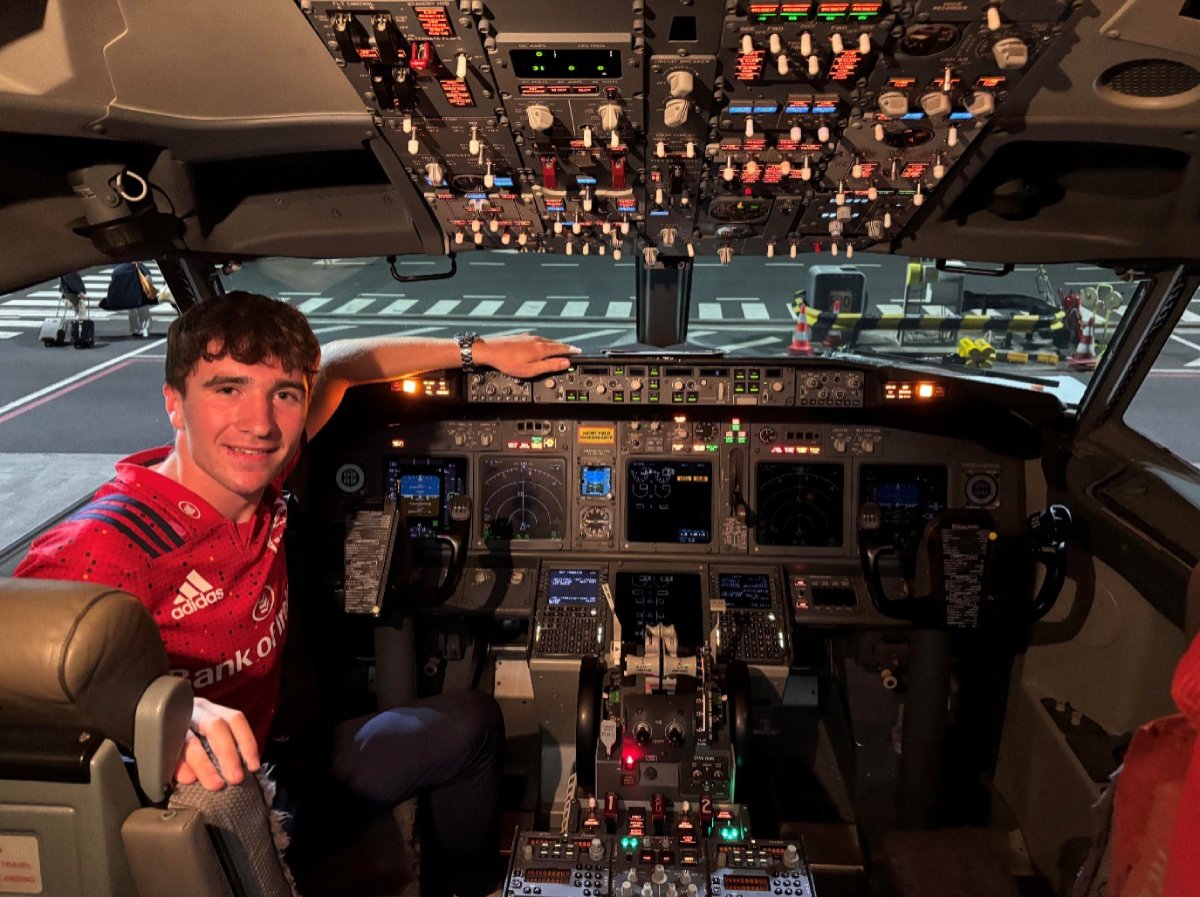
I started the course just over a month ago in mid-September and so far, all my expectations have been exceeded thoroughly. I am part of the largest intake the course has had so far with 28 others embarking on our journeys towards the right-hand seat of the flight deck. The group gelled rather quickly, and we have already embarked on a day trip to Manchester with many more planned. This tightly knit group will be very important to us all when we begin flight school at AFTA next June, so this opportunity to bond with the group until then is truly invaluable.
At the time of writing, we are just over halfway through Semester One and we are well settled into college life. The modules I am taking this semester are, Global Business, Intro to Marketing, Intro to Financial Accounting, Creativity Innovation and Teamwork, as well as Information Technology. My elective module this semester is Contemporary Business, however language studies such as French, Spanish and German were also available to be chosen. The workload is by no means overwhelming however we are kept engaged with assignments and projects throughout the semester. Thankfully, only Marketing and Accounting have final exams before Christmas with the remainder of the modules being graded by continuous assessment projects and presentations. It is however of utmost importance to stay focussed to make the transition from MTU to AFTA in June as smooth as possible, so attending all lectures and applying yourself to the best of your ability in all work given is key to success.
Another great element of the college experience is the extra curricular activities available to students. Many peers have taken up sports such as rugby, soccer, swimming and MMA. On top of these sports are a multitude of societies, most notably for us, the Aviation Society which I have taken up the position of Temporary Chairman. The aviation society is an excellent way of meeting like minded individuals from outside the Global Business and Pilot Studies course. We have many trips in the works including to AFTA and the Annual Kinsale Aviation Festival, both of which we are looking forward to.
In conclusion, I have enjoyed my first few weeks on this course to no end, and I believe this course to be one of, if not the most, futureproof ways of becoming a pilot in Europe. I very much look forward to completing Semester one and moving ever closer to beginning flying in June. I hope I have given you an insight into life on this course and how to get here yourself in the future.

